





































Morocco is not just another Arab country in this file, and that is not a turn of phrase. Article 282 of the Penal Code does not punish the player — it punishes whoever runs a gambling establishment and whoever installs machines on the public highway, and there is no text in Moroccan law that criminalises the act of playing in itself. The state itself holds a monopoly on the lottery, on sports betting and on racing, and licenses seven casinos on its own soil. And since 1 July 2025 it withholds 30 per cent at source on winnings from foreign-source games of chance made over the internet. We say it as it is, so that it is not read for more than it bears: that is a tax provision creating a category of income, not a provision that permits play or forbids it — tax law does not settle whether an activity is lawful. This page describes the texts as we read them in their sources, and gives you their links.
Six Platforms That Accept a Moroccan — and the evidence comes from the registration form, not from their promises
We reviewed ten platforms on this site, then searched the terms of each for “Morocco” by name, and wherever possible opened the registration interface itself to see whether the country was listed. The result: six accept, one excludes Morocco in an explicit text, and three we could not read the terms of at all, so we do not put them in the table. And the order below is not an order of fame, nor of strength of evidence alone: we put first whoever serves a Moroccan practically, in currency and in language, on condition that its acceptance is established. The strongest piece of acceptance evidence we gathered belongs to 10Bet, which is third on the list.
BC.GAME — the only one here that opens the account in Moroccan dirhams
- The Moroccan dirham as a real account currency — we read its published rate at the platform in September 2026: the dollar at 9.29 dirhams
- 8,114 slots from 63 providers, and 685 live dealer tables, by what the platform returns to whoever asks it about Morocco
- A full Arabic interface running right to left down to the footer, and a French interface alongside it
It is our highest score for a reason that concerns Morocco specifically: of all ten, there is no other that holds your account in dirhams. The rest open you an account in dollars or euros, so you pay an exchange spread twice — on deposit and on withdrawal. Its exclusion clause (4.3), as we read it on an earlier visit, excludes “countries on the Financial Action Task Force blacklist”; and the blacklist is three countries only: Iran, North Korea and Myanmar. Morocco is not on it — indeed it left the grey list itself on 24 February 2023 and has not returned. And a note of honesty: this time we could not reopen the terms page automatically, so the evidence we rely on today is the live registration form, which carries Morocco with its country code and its international dialling prefix +212.
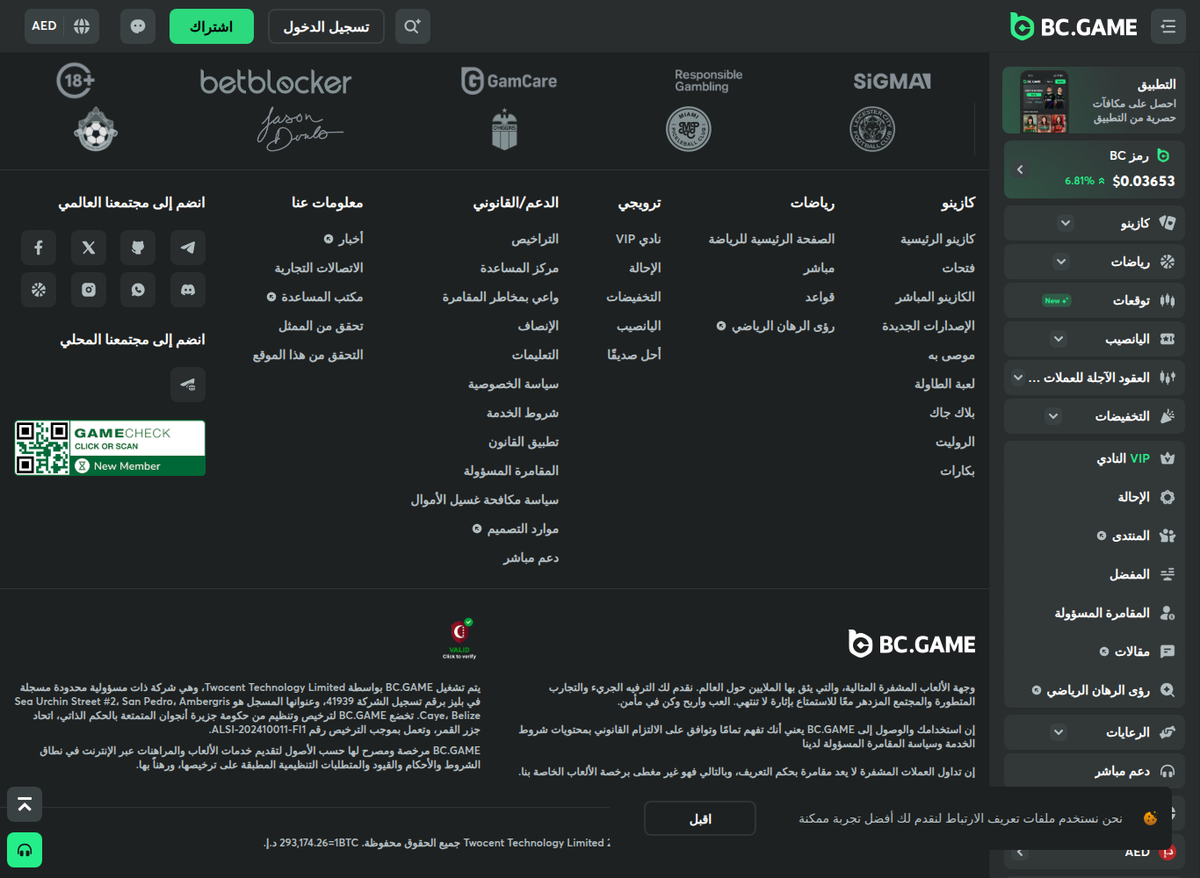
One thing to add on the licence, because we hold the other pages on this site to it. BC.GAME publishes an Anjouan licence, ALSI-202410011-FI1, in the name of a company registered in Belize — and Anjouan has no public register in which you can match the number yourself, unlike Curaçao. So it is a declared licence, not one we matched in a register. Full detail in our BC.GAME review.
YYY Casino — sees more of Morocco than it sees of the Gulf
- 3,993 games from 44 studios, returned by the platform to whoever asks it about Morocco
- Its exclusion clause is a closed list of eleven countries, and Morocco is not among them
- An interface in Arabic and in English, and a high-roller programme
We asked its interface about Morocco and about the Emirates in the same hour: 3,993 games and 44 studios for Morocco, against 2,786 games and 34 studios for the Emirates. That is, a Moroccan sees about 43 per cent more than a visitor from Dubai does at the same platform. And this overturns the common intuition that the Gulf states are “pampered” by operators: blocking does not follow wealth, it follows the studios’ licences and contracts. And we flag a trap in its clause 1.4: it excludes “France and the other French territories”. Morocco is not a French territory — it became independent in 1956, and that text does not reach it.

On the licence, what the site names is the Curaçao sublicence 1668/JAZ. Reading the Curaçao Gaming Authority register ourselves, in the file dated 27 August 2026, the operator — Y Enterprises B.V. — also holds a direct licence, OGL/2024/1123/0641, which expired on 3 July 2026 and is recorded as “Assessment in progress” And a further wrinkle we found in our own review of the brand: the current end-user agreement names Blue Reef Solutions B.V. as the operator, at a different Willemstad address, where it previously named Y Enterprises B.V. Blue Reef Solutions does not appear in the register at all — so the entity the contract names today is not the entity the register knows., entry 157. Full detail in our YYY Casino review.
10Bet — Morocco on the registration list, and Algeria off it
- The registration form lists Morocco explicitly among 122 countries
- An Arabic interface on its own path, and a named licence and company
- Sixteen account currencies, and the dirham is not one of them
This is the strongest piece of evidence we gathered on this whole page. The country-of-residence list in the registration form is loaded from the server rather than from the browser, so it can be read as it is: Morocco is in it, and so are the Emirates, Saudi Arabia, Qatar, Kuwait, Bahrain, Oman, Egypt and Tunisia. And the control test passes too: it does not contain Iraq, Jordan, Lebanon, Libya, Palestine, Sudan, Syria or Yemen — which are exactly the eight countries its clause 3.1 names. But two warnings are owed: clause 3.1 is an open list (“including, but not limited to”), and Algeria is missing from the form without being named in the contract — concrete evidence that the decision as applied is wider than the text, and that it may change without announcement.
And on its licence, which we matched in the register on 9 September 2026: OGL/2024/418/0821, Sunstar Impact N.V., company number 152448, with a validity written as Indefinite, entry 238 — one of the three soundest positions among the ten. Full detail in our 10Bet review.
Rabona — Arabic and French together, and that concerns Morocco and nowhere else
- An Arabic interface running right to left, and several French interfaces
- Its exclusion list is 24 countries, Morocco is not in it, and the form confirms the text
- An account in dollars or euros only
Morocco is one of the few markets that reads both Arabic and French, and this platform serves both languages. And we verified it from two ends: the text of clause 2.3, which counts 24 prohibited countries with Morocco not among them, and the live registration country list, which carries Morocco with its +212 prefix. And we flag a trap we have fallen into before and did not fall into here: clause 15.2 at this platform names Algeria and Tunisia — but it is a clause about the games of one particular provider (NetEnt), not about opening an account. And Morocco is not in it at all.
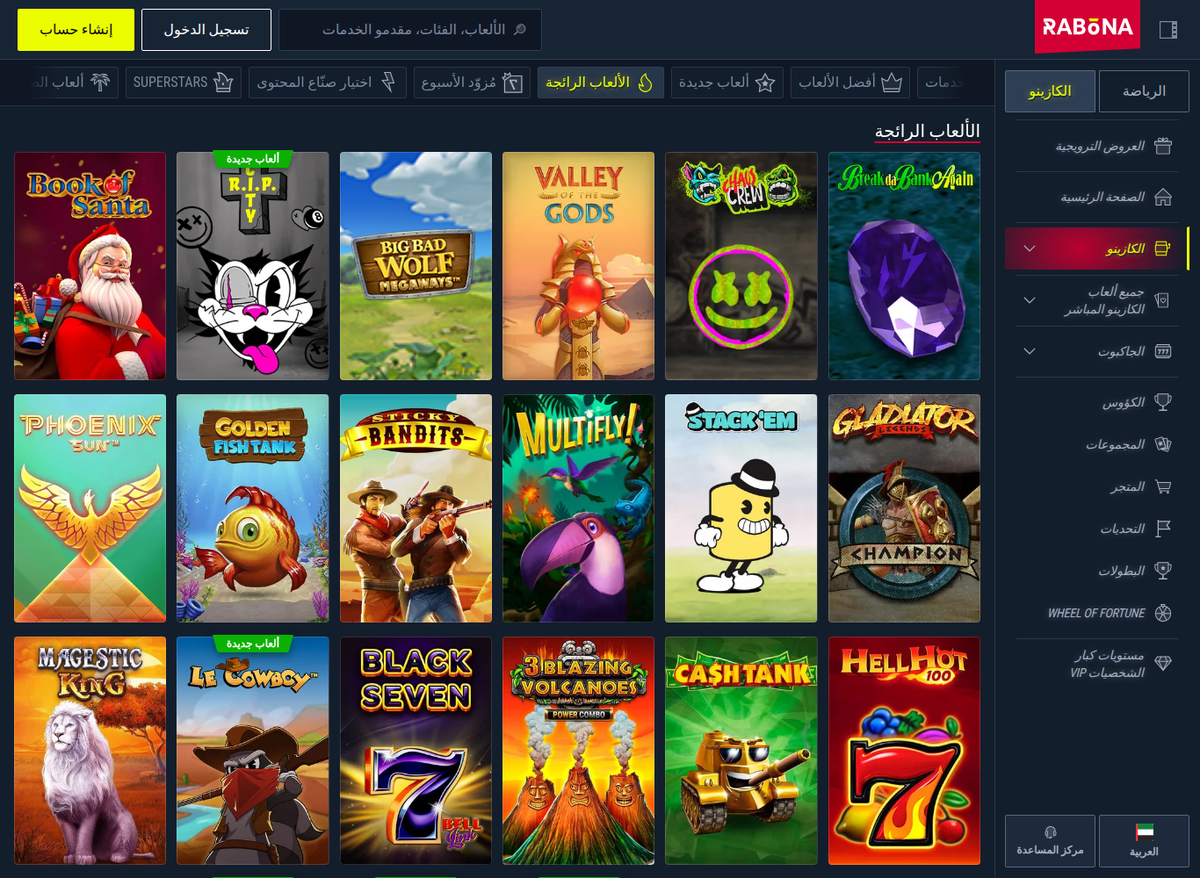
Against that, the thing we say about it on every page: it publishes no licence we have been able to verify — no number, no authority, no operating company on the operator’s own site. Full detail in our Rabona review.
BassBet — the same platform behind another interface, and an exclusion list one country longer
- The same registration country list: 118 countries, and Morocco is in it
- Clause 2.3 counts 25 countries: it is Rabona’s list plus Iraq
- An Arabic and French interface, and an account in dollars or euros
We say it plainly because it is useful to you: this platform and Rabona run on the same technical stack. The proof is arithmetical rather than impressionistic: its exclusion list is Rabona’s list word for word, plus Iraq. What that means in practice is that opening two accounts at both does not double anything for you — the balance, the terms and the providers come from one source. Choose one, and read the bonus condition before you accept it. And like Rabona, it publishes no licence we can verify. Full detail in our BassBet review.
Roobet — it accepts you, but it does not speak to you in Arabic or in French
- Its live blocked-countries list runs to 35 countries, and Morocco is not among them — and that is an absence from a ban list, not an entry on an acceptance list
- And its official article on restricted territories agrees with the live list
- No Arabic interface — and its help centre is in French only
We put it last in the table for two reasons we state openly. The first is that it offers no Arabic at all; it has 50 help articles in French, which may serve some of our readers in Morocco and will not serve others. The second is that seven blocking blocks imposed by the providers themselves list Morocco by name: Big Time Gaming (which covers Red Tiger and NetEnt), Red Tiger and MaxWin, Booming Games, Bulbul, ELK Studios, Gamomat and Push Gaming. And that is a block on games, not a block on the account — you open the account, deposit and withdraw, but part of the shelf will not show for you. We say so because the difference between the two is exactly what other guides confuse. And we classify its acceptance as “no known objection” rather than “confirmed acceptance”: we did not find a registration form there listing Morocco by name as we did at the other five, only a ban list it does not appear on.
Its licence, on the other hand, is the clearest of the six: OGL/2024/687/0427, Raw Entertainment B.V., company number 157205, validity written as Indefinite, entry 552 in the register file dated 27 August 2026. Full detail in our Roobet review.
One Excludes Morocco in the Text, and Three We Could Not Verify
We published six platforms above and not ten, and this is the reason for the shortfall. We put the names of the remaining four here rather than dropping them in silence, because knowing who refuses you is no less useful than knowing who accepts you.
RollingSlots — names Morocco in the account-creation clause
Clause 2.7 of its terms counts about a hundred and fifty countries and says of them, literally, that they are countries where “you cannot create an account”. And Morocco is named in it. Nor is it a cautionary phrase: the text itself reserves to the platform the right to suspend any account created by a resident of those countries and to cancel the deposits and bets attached to it. We read this clause ourselves in September 2026, not copied from another guide. And we add two remarks in fairness: the list covers Algeria, Tunisia, Egypt and half the world, so it is not a decision aimed at Moroccans alone; and even so the result for you is the same. And a third, about quality: its Arabic path is written in English, so even had it accepted you it would not have served you in your language. Its licence, for the record, is in the register and expired on 14 April 2026, recorded as “Assessment in progress” (entry 292). Our RollingSlots review exists in any case — and explains its low score.
Stake, Melbet and Betfinal — no evidence of acceptance and no evidence of refusal
These three get one verdict from different causes, and we write “not verified” rather than “accepts”, because silence is not consent and that is a rule we keep across every page on this site.
- Stake — all its domains raise a Cloudflare challenge against any automated reading. That is a measure against machines, not a country block: its help centre is open and holds 147 articles in Arabic and 147 in French, but not one article about prohibited countries.
- Melbet — its rules page redirects our address to a blocking screen, and it has no endpoint that publishes registration countries. What does work is the odds interface, which answers in French and in Arabic alike.
- Betfinal — 403 on its domain, on its five alternate domains and on its help centre. We did not reach a text we could read.
And there is a specifically Moroccan reason that makes caution more warranted here: Stake and Melbet were named in the list of sites whose blocking was sought before the summary judge in January 2026. And we say it in full so as not to wrong them: the Commercial Court of Appeal overturned that order on 10 February 2026, and a summary judge does not rule on the merits in any case — so there is no final judicial ruling on the lawfulness of these two platforms. But their presence at the heart of a live judicial dispute is something that concerns the site where you put your money, and we mention it for that reason. On licences: Melbet is in the register with a validity written as Indefinite (entry 445), while Stake expired on 9 June 2026 (entry 188) and Betfinal on 8 August 2026 (entry 118), both recorded as “Assessment in progress”.
Is Online Casino Legal in Morocco?
This is the section where Morocco differs from everything we have written about the Gulf and the Levant. And we will say it in one clear form before the detail: Moroccan law punishes whoever organises gambling, and does not punish whoever plays it; there is no Moroccan law on online gambling at all, neither permitting nor forbidding it; the state itself holds a monopoly on the lottery, on sports betting and on horse racing, and licenses casinos on its own soil; and it then taxes winnings made abroad. Every one of those sentences has a source, and they are below.
Article 282 — it punishes whoever runs, not whoever plays
The text is in the Penal Code promulgated by the dahir of 26 November 1962, in “Section Five: offences against the rules governing gaming houses, lotteries and lending on pledges”. And we draw attention to a detail of drafting that falls out of every guide: Morocco numbers by “fasl” and not by “mādda”, so one says “article 282” in the sense of fasl. The article punishes with imprisonment from three months to one year and a fine of 1,200 to 100,000 dirhams whoever, “without authorisation from the public authority”, does one of two things: runs an establishment for games of chance and admits the public to it — and the ruling covers the bankers, managers, agents and employees of that establishment; or installs on the highway and in public places devices whose use rests on skill or chance to obtain a gain against a stake. The penalty doubles if children under eighteen are drawn into the establishment, and confiscation of the stake money is mandatory.
We read articles 282, 283 and 285 and article 609 looking for a text that punishes the player, and we found not one. Article 283 extends the penalty to organisers of an unlicensed lottery; article 285 punishes with one to three months and a fine of 200 to 1,000 dirhams whoever sells its tickets or advertises them; and article 609, in its tenth paragraph, makes setting up play in the street a second-class contravention with a fine of 10 to 120 dirhams. The player is absent from all of these texts. And this separates Morocco from other Arab countries we have written about, among them Oman and Kuwait, where the criminal text reaches the player himself. And we say what honesty requires: this is a reading of the text, not an immunity, and the courts decide. What we found in the way of actual cases — and it is in a paragraph below — was always against intermediaries and organisers, never against a player.
And this article is not read apart from four words in it
The phrase “without authorisation from the public authority” is the hinge of the whole structure. Moroccan law does not forbid gambling; it forbids unauthorised gambling. And the conclusive proof that this is deliberate rather than accidental is in another law: article 8 of Law 23-71 on the national lottery, issued in December 1971, provides that “the authorisation provided for in article 283 of the Penal Code is granted by decision of the Secretary General of the Government”. That is, the legislator wrote the criminalising article to be a door to licensing, not a closed wall.
What the state actually licenses — and it is more than the reader thinks
- The national lottery — Law 23-71, run by the “Société de Gestion de la Loterie Nationale” (SGLN) under a monopoly by decree of 26 June 1972. Its games: Loto, Quatro, Keno, Joker and others.
- Sports betting and forecasts — the monopoly of the Marocaine des Jeux et des Sports (MDJS), founded in 1962, over the whole national territory and over all sporting competitions including virtual ones, except horse and greyhound racing. And its entire proceeds go to the National Fund for the Development of Sport. And we say what we did not verify: the basis for this is commonly given as the dahir of 31 December 1986, article 32, and we were not able to read that text in an official source, so we do not present it as established.
- Horse racing — the SOREC has been the exclusive operator of the pari-mutuel since 2007, across seven racecourses and 23 agencies and more than 800 partner points of sale.
- Seven land-based casinos — and the figure is consistent with the Ministry of the Interior’s own reporting of seven field control missions, not with a press estimate.
And here is a surprise about the casinos: there is no Moroccan casino law
We looked for the dahir or the law that regulates casinos in Morocco and did not find it. The “dahir of 23 July 1965” that foreign guides cite does circulate with a number (1-65-206), but we were not able to locate its text in any official source — it passes from one marketing site to another, and they do not point to any official gazette. So we do not build on it.
What is documented is that the state regulates casinos through the money-laundering door, not through a gaming law. Law 43.05 includes in its second article, among the persons subject to the duty of vigilance, “casinos, including casinos on the internet, and gaming establishments”. And in its 2024 achievements report the Ministry of the Interior states that between April and September 2024, in coordination with the Ministry of Economy and Finance, the DGSN and the Office des Changes, it carried out seven field control missions. And we flag a phrase in Law 43.05 that few have noticed: “casinos on the internet” is there in the text — the Moroccan legislator knows the phenomenon and names it, but in a financial-compliance law and not in a law of permission or prohibition.
And is a Moroccan barred from entering a casino in his own country?
A sentence recurs in foreign guides to the effect that Moroccans are theoretically barred from their own country’s casinos, as is the practice in some other countries. We found no basis for it. There is no nationality condition in articles 282 to 286, nor in Law 23-71, nor in article 2 of Law 43.05. And the Grand Casino La Mamounia in Marrakesh, one of the best known, publishes in its site footer one condition and no more: “admission is restricted to those aged eighteen and over, and a valid identity document may be requested at the entrance”. Not a word about nationality. We write it as it is: we found no text restricting entry to foreigners — which is a more precise form than “permitted”.
Playing online: no law permits it and no law forbids it
We reviewed the Penal Code, Law 23-71, Law 07-03 on offences against automated data processing systems, and Law 24-96 on post and telecommunications. There is no text in any of them that addresses online gambling as conduct. And Law 07-03 in particular — which was folded into the Penal Code as articles 607-3 to 607-11 — does not mention gambling, betting or lotteries even once. This differs from Oman, for example, where the cybercrime law names online gambling explicitly.
The only exception is that the public operators themselves work online: the Marocaine des Jeux et des Sports runs a full betting site with account opening, top-up, withdrawal and an app; the national lottery offers “remote” play; and the SOREC allows betting on racing over the internet. That is, online gambling exists in Morocco lawfully — but in the name of the state alone.
And there is a curious detail in this that we verified ourselves: the state betting platform runs on Italian software, its betting domain is named literally in Italian (scommesse means “bets”), and Italian phrases appear on its pages untranslated — of the kind “bonus not available”, “national self-exclusion” and “responsible gaming”. This is not a legal defect, but it says something about the distance between the national monopoly and the market it serves.
The blocking issued in January 2026 — and overturned in February
This is the most recent and most important episode, and we tell it by its dates, because most of what is published about it stops at the first half.
- 15 December 2025 — the MDJS obtains a bailiff’s report establishing that foreign betting sites do in fact open from inside Morocco.
- 12 January 2026 — the summary judge of the Commercial Court of Casablanca orders the three telecoms operators (Maroc Telecom, Orange Maroc and Inwi) to block the sites and all their subdomains and addresses, under a compulsory penalty of 10,000 dirhams for every day of delay.
- The list named, among others, 1XBET, Betway, Betwinner, Linebet, Megapari, Melbet, Mostbet, Mystake, Stake and Sportsbet.io, alongside local intermediaries accused of facilitating deposits and withdrawals through Moroccan accounts and phone numbers.
- 10 February 2026 — the Commercial Court of Appeal overturns the decision. The operators are no longer bound to block, nor exposed to the penalty. And the stated ground is technical impossibility, not the lawfulness of the sites.
And we add what the Moroccan press itself says and the guides do not: the appeal decision did not rule on the merits and did not touch the legal framework confining sports betting to the public operator. So the position today is: no blocking in force, the monopoly standing as it was, and the file open. Which means in practice that what you read today may change with a new decision; anyone holding a balance at one of these platforms would do better not to leave it there without reason.
The tax: 30 per cent on foreign winnings, and an exemption reserved to the national lottery alone
This is the chapter we do not find written in any Arabic guide about Morocco, and it is the most important in practice for anyone who wins.
Finance Law No. 60-24 for 2025 — promulgated by dahir 1-24-65 of 13 December 2024 — created in the General Tax Code a new category of taxable income which expressly covers “winnings from foreign-source games of chance made over the internet, in whatever form”. And it obliged credit institutions and anyone intervening in the payment of those winnings to withhold at source at a discharging rate of 30 per cent. The texts to consult are article 22 and article 70 bis of the General Tax Code, with the withholding in article 73. The withholding applies from 1 July 2025, while the income category itself applies to income acquired from 1 January 2025.
And on the other side, article 5 of Law 23-71 says that “the winnings of the national lottery are exempt from all taxes”. As for winnings from Moroccan-source games of chance, they carry a social solidarity contribution of 2 per cent, borne by the operator and not by the winner.
Read the two sentences together and you see the whole picture: the same game, two opposite tax fates, and the difference is the identity of the operator. And we add a necessary reservation: the text imposes the withholding on “winnings”, and we did not find in the official note of the Directorate General of Taxes a precise definition of the base — whether it is the net profit or the amount transferred. A threshold of 5,000 dirhams at which the withholding begins also circulates in the economic press, and we did not find it in the text or in the note, so we do not confirm it. What matters to you in practice is that the bank withholds, not you declare — that is, it happens automatically when the money comes in.
And a consequence follows from this drafting that has to be said plainly, because it cuts both ways. The withholding is imposed on credit institutions and those intervening in the payment of the winnings; and a withdrawal in cryptocurrency to a private wallet does not pass through a credit institution at all, so the text finds nobody to withhold. This is a description of how the text works, not advice: whoever takes that road runs straight into the Office des Changes communiqué of 2017, which treats dealing in virtual currencies as a breach of exchange regulation, and into the penalties of the 1949 dahir which we set out shortly. That is, leaving by the tax door means entering by the exchange door, and there is no clean third road between them.
Who is actually pursued: the Tinghir case, July 2025
On instructions from the King’s prosecutor at the Court of First Instance of Tinghir, the judicial centre of the Royal Gendarmerie arrested three people on 29 July 2025 on suspicion of acting as intermediaries to transfer funds to international online gambling platforms — the platform named in the case is 1xbet. They were prosecuted in custody on charges of “running an establishment for games of chance, advertising and promoting an unlicensed lottery, and the unlawful transfer of funds and breach of the exchange regulation”, and were remanded to the local prison in Ouarzazate.
Look at the charges again, because they are a lesson in themselves. “Running an establishment for games of chance” is literally article 282, and “advertising and promoting an unlicensed lottery” is literally article 285. That is, the Moroccan public prosecutor applies to intermediaries of digital platforms articles written in 1962 for gambling houses and lottery-ticket sellers. The file was built on Office des Changes reports about the haemorrhage of hard currency, and the intermediaries were selling virtual credit to bettors in dirhams or dollars against commissions from the parent company of between three and five per cent, with a further commission reported at up to 25 per cent of the stake. And the practical conclusion: prosecution reaches the intermediary who collects people’s money, not the player who deposits himself. Which is one more reason to avoid the “intermediaries” who offer to top up your account for a commission.
Advertising is prohibited — and we correct a common error about which text says so
Article 2 of Law 77-03 on audiovisual communication prohibits “advertising containing an advertising message in favour of any service or product harmful to individual health”, and expressly counts among these “games of chance and betting” alongside weapons, alcohol and cigarettes. And this prohibition is often attributed to Law 66-16 of 2016, which is wrong: its source is Law 83-13, promulgated by dahir 1-15-120 of 4 August 2015. This text explains why you see no casino advertisements on Moroccan channels, and why all the promotion has moved to social networks and to “influencers”, where this text does not reach.
Virtual private networks
We found no Moroccan text penalising the use of a virtual private network. Article 83 of Law 24-96 punishes whoever establishes a telecommunications network without authorisation, but one of the lawyers who took part in drafting that law told the Moroccan press that the text does not apply to what relates to the internet and that there is no legal basis for a criminal prosecution over the use of these networks. We write it as it is: no text — neither “permitted” nor “forbidden”. And we add that a platform may void your account if you breach its terms on this point, which is a contractual risk and not a criminal one.
The sources — because we are asking you to check for yourself
Everything above is taken from published texts, and we give their links so that you do not have to take our word for it. The official reference in Morocco is the Arabic text in the Official Bulletin; the French translation is official too, and some of it is easier to download.
- The Penal Code (articles 282-286), consolidated version, full text in PDF
- Law 23-71 on the national lottery and authorised lotteries, on the site of the Secretariat General of the Government
- Law 43.05 on combating money laundering, updated and consolidated version, on the Office des Changes site
- The General Instruction on Exchange Operations for 2026 (193 pages)
- Office des Changes communiqué on virtual currencies, 20 November 2017
- The dahir of 30 August 1949 on the repression of exchange regulation offences
- Draft Law 42.25 on crypto-assets, published for public consultation
- The texts governing audiovisual communication, including Law 77-03 as amended
- Morocco’s standing with the Financial Action Task Force (FATF)
- The public operators: Marocaine des Jeux et des Sports, the national lottery, and the SOREC
And where we stand in all this
This site is a guide, not a legal adviser, and we work on commission from some of the platforms named above — a commission that does not change our ranking and does not buy a word. What we have written here is a description of texts we read ourselves in their sources, and it may change: the judicial file is open, the draft law on digital assets is on the table, and the monopoly stands. If your decision is worth a lot of money, ask a Moroccan lawyer and do not settle for a page on the internet — this page of ours or any other. And we add what is not said often enough: playing is entertainment, not a source of income, and it is played only with money that can be lost without trace. If you feel you have lost control, self-exclusion is available at every serious platform, and it is a decision taken early rather than late. We do not know of a national helpline in Morocco dedicated to gambling addiction, and we will not invent one for you; the nearest thing available is the platform’s own tools — a deposit cap, a loss cap and a temporary exclusion — and consulting a psychiatrist.
What Playing Costs You: the national lottery keeps close to 40 per cent, and the foreign site under nine
This comparison does not exist in any guide about Morocco, and it is nonetheless the most important figure on the page, because it is measured from official texts rather than from advertising. And we explain how to read it before we set it out.
The three figures, each from its own source
- The national lottery: keeps no more than 40 per cent. Article 2 of Law 23-71 sets a floor: “the amount of the prizes must represent 60 per cent of the amount of each issue”. That is, the return to players is 60 or more, not exactly 60 — the figure is a floor, not an average.
- Horse racing: keeps no less than 30 per cent. The SOREC publishes itself that the pari-mutuel returns “up to” 70 per cent to the winners, and that the remainder is split 20 for the state and 10 for the sector and its running. And this is a ceiling, not an average.
- The foreign site: keeps about 8.3 per cent in sports betting. We measured the margin of one of the largest operators on the major European leagues and it was 9.06 per cent; and the margin is not the share held back — the share held back is the margin divided by one plus the margin.
And because confusing the two figures is common, we put it in numbers: a margin of 9.06 per cent means the operator keeps 8.31 dirhams out of every hundred you stake, not 9.06. And that difference grows as the margin grows; whoever neglects it overstates what it costs him.
So what does that mean in a hundred dirhams?
- A hundred dirhams at the national lottery: the expected return is 60 dirhams — and the winnings are exempt from every tax by the text of article 5.
- A hundred dirhams on a race bet: the expected return is 70 dirhams.
- A hundred dirhams on a sports bet at a foreign site: the expected return is 91.7 dirhams — before tax.
And those last two words change everything, which is why we set them out rather than hide them. If the 30 per cent withholding falls on the amount transferred to you — the harsher reading — then the 91.7 becomes about 64 dirhams, and the gap between the foreign site and the national lottery all but disappears. And if the withholding falls only on the net profit, the gap stays wide in the foreign site’s favour. Indeed the comparison reverses in one case, which we state rather than conceal: the pari-mutuel on racing returns up to 70 dirhams with no withholding at source, against about 64 at the foreign site on the harsher reading. We did not find in the official note of the Directorate General of Taxes anything that settles the base, so we do not settle it ourselves. Two things we do say with confidence: that the national lottery is the most expensive of the three in its direct cost, and that the tax on foreign winnings narrows that gap and may not be left out of the calculation.
And a final methodological reservation: the lottery and race betting work on a pool system, and sports betting works on fixed odds, and these are two different mechanisms. What makes the comparison legitimate is that in both cases we are measuring one thing: how much stays in the operator’s hand out of every hundred dirhams that go in. The distribution of the chance of a large win is entirely different between the two.
The Dirham and the Twenty-Thousand Ceiling — the real constraint on a Moroccan
We concluded that the criminal law does not pursue you. But the actual constraint on a Moroccan is not criminal, it is exchange-related. And this is the section that decides whether you can pay at all.
The dirham is not a freely convertible currency
Bank Al-Maghrib operates a fluctuation band around a central rate computed on a basket of 60 per cent euro and 40 per cent dollar, and the band was widened to five per cent up and down on 9 March 2020. And the September 2026 rate: the euro at about 10.78 dirhams and the dollar at about 9.26 dirhams. And because the dirham is not convertible, there is no “street rate” diverging from the official one as there is in other countries in this series; the problem in Morocco is not the rate, it is the quantity allowed.
And we measured one point that concerns the player: the only platform on this list that opens an account in dirhams prices it at 9.29 dirhams to the dollar in September 2026 — a difference of about three per thousand from the cross rate for that month. The difference is not in your favour, but it is small by market standards: small, not absent. And it does not include the cost of getting the money into the platform in the first place, which is the larger cost — see the cryptocurrency paragraph below.
The e-commerce ceiling: 20,000 dirhams a year, and this is the figure that concerns you
Many people pass around the “tourist allowance” and its large number: 100,000 dirhams as a base, plus the equivalent of 30 per cent of the income tax paid for the previous year, up to 500,000 dirhams in total. That figure does not concern you here, because the Office des Changes general instruction confines it “exclusively” to travel, accommodation and transport expenses. The figure that concerns payment at a foreign site is the e-commerce allowance: 20,000 dirhams per calendar year per person, raised in 2026 from 15,000. And at the September 2026 rate that is about 1,855 euros or 2,159 dollars for the whole year.
- The ceiling is per person, not per bank. The allowances are recorded in a mandatory central system on the basis of the national identity card, so opening accounts at three banks does not multiply the ceiling.
- It does not carry over. Whatever is unused by 31 December does not pass to the following year.
- The Moroccan card is domestic by definition. International capability is not a property of the card but an allowance balance loaded onto it, and the instruction requires the card to be “technically designed so as to prevent any payment or withdrawal exceeding the authorised amounts”. Some banks say so explicitly in describing their cards: valid inside Morocco only.
- And what happens when the ceiling runs out? The transaction is refused at the point of payment, and that is all. The technical condition the instruction imposes on the card makes the limit apply at the moment of payment rather than afterwards: refusal is the form the ceiling takes in reality, not a fine and not a procedure. What happens after that falls outside the allowance — a transfer through another channel — and that is where the exchange texts begin.
And do the exchange texts forbid playing by name? No — they do not mention it at all
We reviewed the General Instruction on Exchange Operations in force since 1 January 2026 — 193 pages, drafted in French — searching for its six words: jeux, pari, casino, loterie, hasard and crypto. Zero occurrences of each. That is, the Moroccan exchange text does not mention play or cryptocurrencies by name at all. But that does not mean permission, because the Moroccan system is one of positive authorisation: the instruction provides that “every exchange operation not expressly defined… remains subject to the authorisation of the Office des Changes”, and that operations are to be carried out “in compliance with the legislative and regulatory provisions laid down in other texts”. So a deposit at a foreign site does not fall under any named heading, and passes in practice through the general e-commerce allowance alone.
And the penalty for breaching the exchange texts is not slight, and it comes from the dahir of 30 August 1949: imprisonment from one month to five years, and a fine of not less than five times the value of the object of the offence, with mandatory confiscation. Which is why the charge of “unlawful transfer of funds and breach of the exchange regulation” stood alongside the two gambling articles in the Tinghir file.
Cryptocurrency: prohibited as a means of transfer, not as an idea — and the difference is fundamental
The Office des Changes communiqué of 20 November 2017 says in terms that “transactions carried out through virtual currencies constitute a breach of the exchange regulation, punishable by the penalties and fines provided for in the texts in force”, and reminds that financial transactions with abroad must be made through authorised intermediaries and in currencies quoted by Bank Al-Maghrib. And read the reasoning carefully, with the precise characterisation that goes with it: the communiqué describes the matter as a breach of exchange regulation and not an offence laid down in the Penal Code, and the reason is that a digital currency is not a quoted currency and does not pass through an authorised intermediary. But the exchange penalties are themselves not administrative fines: the 1949 dahir set out above punishes an exchange breach with imprisonment from one month to five years. So “not a criminal offence” is not to be read as “without risk”. And there is no text in Moroccan law criminalising the holding of a digital currency. Whoever writes that “holding bitcoin is a crime in Morocco” is wrong on the law.
And the position today: a draft law No. 42.25 on crypto-assets, prepared on 5 August 2025 and published for public consultation in autumn 2025, under the joint supervision of Bank Al-Maghrib and the AMMC, which does not grant crypto-assets the status of currency. It has not been adopted — neither by the Council of Government nor by Parliament, as of September 2026.
And the paradox that deserves writing down: Morocco ranks 24th in the world in the 2025 cryptocurrency adoption index, out of 151 countries, while the exchange regulator has been saying for nine years that using them is a breach. And here a practical contradiction appears that you need to know: the only platform here that opens you an account in dirhams is a platform built on cryptocurrency, and the lawful road to those currencies is closed from inside the Moroccan exchange system itself.
Payment Methods from Morocco — and which of them actually works
There is no use in a list of icons. We write what we verified, and we say plainly what we did not verify.
The virtual card of licensed wallets — the first practical route
Payment institutions licensed by Bank Al-Maghrib issue virtual cards designed for international purchases. One of them states in its terms that the card “only accepts payment at international sites”, and it is loaded in dirhams and settled in hard currency within the limits of the exchange allowance. And a practical warning: some of these institutions still advertise a ceiling of 15,000 dirhams, which is the 2025 figure — the new instruction raised it to 20,000 from 1 January 2026, so ask for the figure in force rather than the one published.
The ordinary bank card — and the condition everyone overlooks
Your domestic card will not work at a foreign site unless you activate an allowance on it. Some banks have made activation an option in the app, and some issue two separate lines: international cards with an annual fee, and cards valid inside Morocco only. As for blocking the betting merchant category code at the level of Moroccan banks, we looked for evidence of it and found not one document from the banks, nor from the interbank centre (CMI), nor from Bank Al-Maghrib. So we neither confirm it nor deny it — your bank may refuse the transaction and may accept it, and only trying settles it.
PayPal — it works, and withdrawal in dirhams became possible in September 2025
Since September 2025 a Moroccan has been able to withdraw a PayPal balance in dirhams directly from the app of one of the Moroccan payment institutions, without going through a branch. And that changes something practical for anyone receiving money from abroad. But note that PayPal being accepted at the platform is another matter: many casino operators do not accept it at all.
Skrill and Neteller — we did not verify
We reviewed the two wallets’ official pages of unserved countries and did not find Morocco mentioned either for inclusion or for exclusion, and their Moroccan domains return 404. That is, we have nothing with which to confirm availability. Whoever writes to you that they are “available in Morocco” is copying rather than verifying.
Cryptocurrency and bank transfer
Cryptocurrency is the fastest route at the platforms that accept it, and it is at the same time the route the exchange regulator treats as a breach, as explained above. And an international bank transfer passes through an authorised intermediary and leaves a trace in the beneficiary’s name, and it is the route that runs straight into the allowance ceiling. And we add a warning drawn from an actual court file: do not use an “intermediary” who offers to top up your account for a commission. Those are precisely the people the public prosecutor pursues, and your money with them has no protection whatsoever.
Who Sees You and Who Does Not — our own measurement of the providers
The number of games advertised on any platform’s page is not the number you see: the library is filtered by country, and the filtering happens at the platform, not in your browser.
How we measured, and the limits of the measurement. We passed the country code “MA” to the platforms’ interfaces and read what they returned, for Morocco and for the Emirates in the same hour. And we say it plainly because it limits the value of the figures: we did not measure from a Moroccan internet address, because our measuring tool has no exit inside Morocco. The figures below are therefore what the platform declares to whoever asks it about Morocco, and may differ slightly from what appears to you on your own network. Even so the comparison between two countries remains valid, because it is measured the same way in both cases.
685 live dealer tables from seven providers, returned by the platform to whoever asks it about Morocco. We did not break the figure down by provider because we did not measure it that way, and we do not write a number we have not measured.
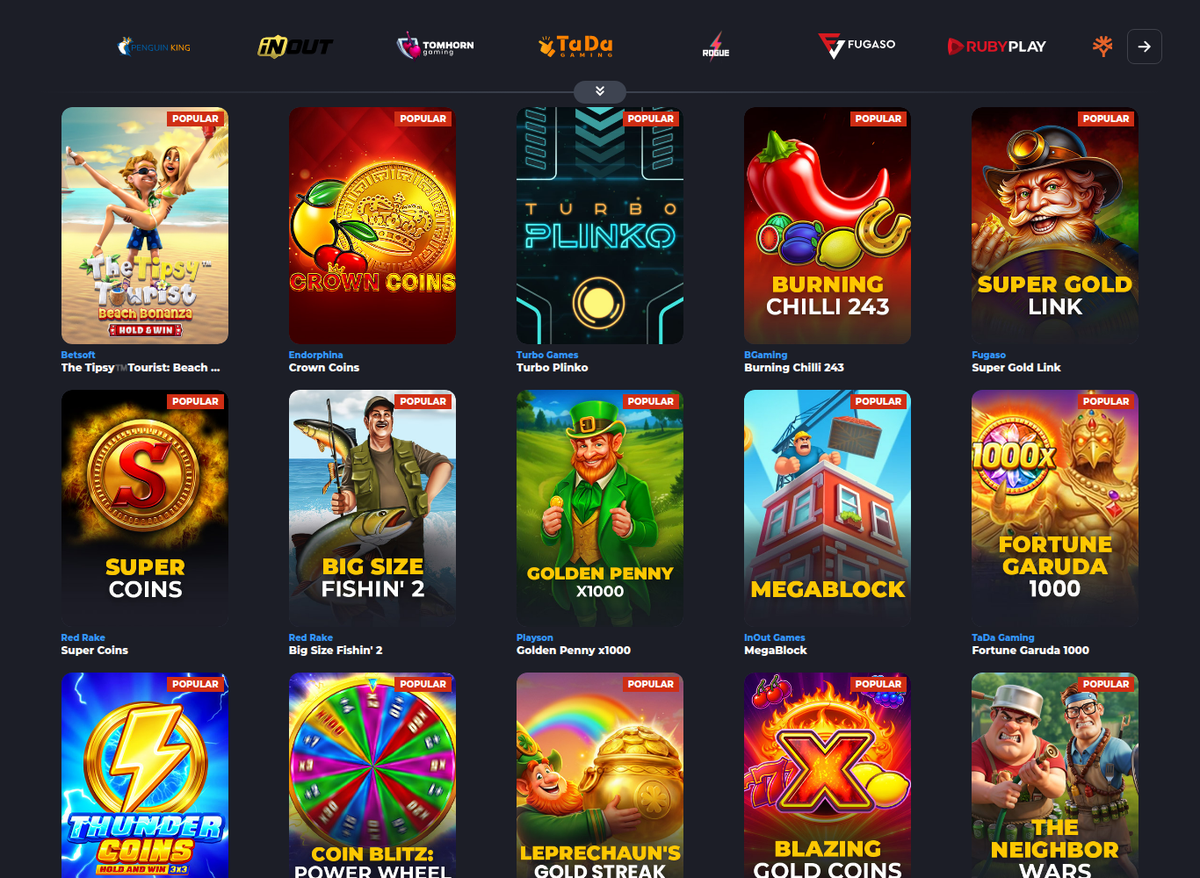
At two platforms we measured the difference and found it in Morocco’s favour: 3,993 games from 44 studios for Morocco against 2,786 from 34 for the Emirates at the first; and 8,114 slots from 63 providers and 685 live tables for Morocco at the second. Blocking does not follow the wealth of the market, it follows the studios’ contracts and licences.
At one of the six platforms Morocco is listed in seven blocking blocks imposed by the providers themselves: Big Time Gaming (which covers Red Tiger and NetEnt), Red Tiger and MaxWin, Booming Games, Bulbul, ELK Studios, Gamomat and Push Gaming. And this is a block on games, not a block on the account: your account works, but part of the shelf does not show for you.
Casino Bonuses — and how to read the condition before you accept it
The welcome bonus
What is most often offered to a Moroccan is a match on the first deposit, at a percentage and a ceiling. And the number that matters to you is not the match percentage but the volume of betting required against every dirham of bonus. Work it out like this: multiply the bonus amount by the number of times. A bonus of 1,000 dirhams at 40 times means 40,000 dirhams staked before any withdrawal; and a bonus of 500 dirhams at 20 times means 10,000. The second is four times lighter even though it looks smaller. And read also what the condition is computed on: on the bonus alone, or on the bonus and your deposit together — the difference between them is double. And note that the account is usually in dollars or euros, so the advertised ceiling is translated into dirhams at the day’s rate.
Cashback on losses instead of a bonus
Some platforms give no welcome bonus at all and give a weekly cashback on net losses. And this may suit someone who plays regularly better, on one condition you verify yourself: is the cashback cash withdrawable immediately, or credit carrying a wagering requirement? The two forms go by the same name, and the difference between them is the whole difference. And for someone who deposits once and then tries it out, the classic bonus is more useful.
Free spins and reloads
Free spins are spent on games the operator chooses — and they may be from a studio blocked from Morocco altogether, so you find the bonus in your account and do not find the game. Check the name of the game before accepting the offer, not after.
How to Choose a Casino When You Are in Morocco
First: does it accept you at all?
Read the prohibited-countries clause and look for “Morocco” by name before anything else. One of the ten we reviewed names Morocco explicitly, and four of the ten name other Arab countries. Putting money at a platform that excludes you means the withdrawal may be refused after you win, not before.
Second: a licence is a number in a register, not a badge in a footer
No Moroccan authority licenses online casinos, so the licence you see is always foreign. And its value lies in the number being checkable in the public register of the granting body. A badge without a number is worth nothing, and an expired number is worse than a missing badge.
Here is where the ten stand, read in the Curaçao register on 9 September 2026: Roobet, Melbet and 10Bet carry a validity written as Indefinite; YYY, Stake, Betfinal and RollingSlots are in the register with expired licences recorded as “Assessment in progress” (3 July, 9 June, 8 August and 14 April 2026 respectively); BC.GAME publishes an Anjouan number with no public register to check it against; and Rabona and BassBet publish no licence we can verify.
And for context, so that this is not misread: in the register file dated 27 August 2026 there are 661 entries, of which 312 are “Assessment in progress” and 204 carry the positive status written as “Indefinite”. This is a licensing system in transition, not one struggling company.
Third: in what currency will it hold your account?
Only one of the six holds the account in dirhams. At the rest you will pay an exchange spread twice, and the allowance ceilings will be computed on the value of the transaction in hard currency. And this is not a detail: over a year, the double spread may cost you more than the whole welcome bonus.
Fourth: Arabic or French — and the interface or the contract?
Morocco is one of the few markets that reads both languages, and that widens your choices. But the distinction we insist on across all our pages still holds: a translated interface is one thing, and a translated contract is another. Most platforms translate the buttons and leave the terms in English — and those are the text that will be held against you in a dispute.
Fifth: library size — and read the number carefully
The number published on the platform’s page is the whole library, not yours. And we have published on this page what the two platforms return to whoever asks them about Morocco, so rely on that figure rather than the one on the home page.
Popular Online Casino Games
Slots

The most played in every market, and the widest shelf a platform returned to us about Morocco came to 8,114 games. And the most important figure in them is the theoretical return to player, which is published on each game’s page at serious operators.
Live dealer tables

Roulette, blackjack and baccarat streamed live from a studio. And this is the section where the effect of blocking shows most clearly: 685 tables from seven providers only, by what one of the platforms returns about Morocco.
Crash games

A multiplier game that climbs until it collapses, and you have to cash out before the collapse. Short and fast, and among the most recent additions to the casino shelf, with its own section at most of the six platforms.
Classic table games

Software versions of roulette and blackjack with no human dealer. Faster and cheaper at the minimum stake, and with no waiting.
Poker

A Moroccan distinguishes between poker against the casino and poker against other players. And the second is the one for which international tournaments are held in the casinos of Marrakesh themselves — licensed casinos on Moroccan soil.
New Casinos Entering the Market
New platforms appear every month, and they usually start with more generous bonuses to buy themselves players. And that is worth looking at, on two conditions we set for ourselves before setting them for you: that you have read the prohibited-countries clause and Morocco is not named in it, and that the licence number is checkable in a public register. A platform two months old with a doubled bonus and no register to fall back on is not an opportunity, it is a risk with nothing on the other side. And we do not list on this site a platform whose terms we have not read ourselves.
FAQs — Online Casinos in Morocco
There is no Moroccan body that licenses online casinos, and there is equally no Moroccan law that addresses online gambling as conduct — neither in the Penal Code nor in Law 07-03 on offences against automated data processing systems. Article 282 of the Penal Code punishes whoever runs an establishment for games of chance “without authorisation from the public authority” with imprisonment from three months to one year and a fine of 1,200 to 100,000 dirhams. As for the public operators — the national lottery, the Marocaine des Jeux et des Sports and the SOREC — they work online under licence and monopoly.
We read articles 282, 283 and 285 and article 609 of the Penal Code and found no text that punishes the player. The penalty is directed at whoever runs the establishment and at the bankers, managers, agents and employees in it, and at organisers of an unlicensed lottery, its ticket sellers and its advertisers. And this separates Morocco from other Arab countries we have written about, among them Oman and Kuwait, where the criminal text reaches the player himself. And we say it honestly: this is a reading of the text, not a legal immunity, and the courts decide.
It happened and was then overturned. On 12 January 2026 the summary judge of the Commercial Court of Casablanca, at the request of the Marocaine des Jeux et des Sports, ordered the blocking of a list of sites and all their subdomains, under a compulsory penalty of 10,000 dirhams for each day of delay. But the Commercial Court of Appeal overturned the decision on 10 February 2026, and the stated ground was technical impossibility. So there is no blocking in force today, the legal monopoly on sports betting stands as it was, and the file is open.
Yes if they come from abroad. Finance Law 60-24 for 2025 created a new tax category expressly covering winnings from foreign-source games of chance made over the internet, and obliged credit institutions to withhold at source at a discharging rate of 30 per cent, in force since 1 July 2025. By contrast, article 5 of Law 23-71 provides that the winnings of the national lottery are exempt from all taxes. And we did not find in the official note of the Directorate General of Taxes anything defining the base precisely — whether it is the net profit or the amount transferred — so we do not settle that. And the bank withholds automatically; you do not declare.
20,000 dirhams a year is the e-commerce allowance ceiling in the General Instruction on Exchange Operations in force since 1 January 2026, raised in that same year from 15,000 dirhams. But note an important characterisation: that allowance is set for online purchases with an international card, the instruction does not mention play or betting at all, and it provides that every exchange operation not expressly defined remains subject to the authorisation of the Office des Changes. That is, we describe the ceiling that exists, and we do not confirm that a deposit at a betting site falls under it. And the ceiling is per person, not per bank: allowances are recorded in a central system on the basis of the national identity card, and whatever is unused by 31 December does not carry over. As for the “tourist allowance” that may reach 500,000 dirhams, it is reserved exclusively for travel and accommodation expenses and does not serve you here.
No, and they do not mention it at all. We reviewed the General Instruction on Exchange Operations, 193 pages drafted in French, searching for its six words: jeux, pari, casino, loterie, hasard and crypto, and found not one occurrence of any of them. But the Moroccan system is one of positive authorisation: every exchange operation not expressly defined remains subject to the authorisation of the Office des Changes. That is, a deposit at a foreign site passes in practice through the general e-commerce allowance alone.
The distinction here is fundamental and most of what is published gets it wrong. The Office des Changes communiqué of 20 November 2017 treats transactions carried out through virtual currencies as a breach of the exchange regulation, because they do not pass through an authorised intermediary and are not made in a currency quoted by Bank Al-Maghrib. So it is a breach of exchange regulation and not an offence laid down in the Penal Code, and there is no Moroccan text criminalising the holding of a digital currency. But do not read that phrase as “without risk”: the dahir of 30 August 1949 punishes an exchange breach with imprisonment from one month to five years and a fine of not less than five times the value of the object of the offence, with confiscation. And draft law 42.25 on crypto-assets, prepared in August 2025, has not been adopted.
Only one of the ten we reviewed opens the account in dirhams, and we read its published rate in September 2026: 9.29 dirhams to the dollar, that is a difference of about three per thousand not in your favour against the cross rate for that month. The rest open you an account in dollars or euros, so you pay an exchange spread on deposit and on withdrawal alike. And the paradox is that this same platform is built on cryptocurrency, which is the route the exchange regulator treats as a breach.
We found no text restricting entry to casinos to foreigners: not in articles 282 to 286, not in Law 23-71, and not in article 2 of Law 43.05. And the Grand Casino La Mamounia in Marrakesh publishes one condition in its site footer: being eighteen and a valid identity document at the entrance, with no mention of nationality. And the Ministry of the Interior confirms the existence of seven casinos subject to field control under money-laundering Law 43.05.
Because one excludes Morocco in the text and three we could not read the terms of. Clause 2.7 at one of them counts about a hundred and fifty countries whose residents are barred from creating an account, and Morocco is named among them, with the platform reserving the right to suspend the account and cancel the deposits attached to it. And the other three prevent automated reading of their terms or redirect our address to a blocking screen, so we write “not verified” rather than “accepts”. The names of the four and the texts of their provisions are in a separate section on this page.
We found no Moroccan text penalising its use. Article 83 of Law 24-96 punishes whoever establishes a telecommunications network without authorisation, but one of the lawyers who took part in drafting that law told the Moroccan press that it does not apply to what relates to the internet and that there is no legal basis for a criminal prosecution over the use of these networks. And we add that a platform may void your account if you breach its terms on this point, which is a contractual risk and not a criminal one.
The intermediaries and the organisers. On 29 July 2025 the judicial centre of the Royal Gendarmerie in Tinghir, on instructions from the King’s prosecutor, arrested three people on suspicion of acting as intermediaries to transfer funds to international gambling platforms — the platform named in the case is 1xbet — and they were prosecuted in custody on charges of running an establishment for games of chance, advertising and promoting an unlicensed lottery, and the unlawful transfer of funds and breach of the exchange regulation. And the practical lesson: do not top up your account through an intermediary who takes a commission — your money with him has no protection, and he is himself the target of prosecution. And we found not one documented case against a player for playing.