































Best Online Casinos for Players in Egypt
We ranked this list on a stated test, and we set it out here so you can hold us to it: first what we can document about a platform accepting a player resident in Egypt, then what the currency costs him, then how clear and checkable the licence is, and last whether the Arabic is real. Where those pull against each other — and they often do — we put the first ahead of the rest, and wrote each site’s reason in its place.
And Egypt is a case that resembles no other country we have covered. In the whole Gulf there is not one licensed land-based casino; in Egypt legal gambling floors have operated inside hotels for decades, and pay the state a royalty of up to half their revenue. The difference is that the law closes them to Egyptians themselves: article 24 of the Hotel and Tourist Establishments Law No. 8 of 2022 states literally that “gambling games may not be practised in the establishments except by non-Egyptians”. The state does not see something to forbid in the game itself; it sees the Egyptian as the one to be kept from it.
Which leads to the second conclusion, and it is the most important thing on this page: the real obstacle facing an Egyptian player is not a criminal text, it is the pound itself. The gambling fine in the Penal Code still reads as it was written — a thousand pounds at most, about twenty dollars today — while the currency has lost more than seventy per cent of its value since 2022, and no local payment method leaves the country. Read the payments section before you read the bonuses section.
YYY Casino — the only one here that names Egypt in its list of permitted countries
We place it first for one reason that admits no interpretation: it is the only platform on this list where we found Egypt written by name in the registration settings themselves, rather than inferred from the absence of its name on a banned list. We pulled the operator’s settings while preparing this page and found the list of countries permitted to open an account contains nineteen countries, all of them Arab, with Egypt among them alongside Algeria, Bahrain, the Comoros, Djibouti, Jordan, Kuwait, Lebanon, Libya, Mauritania, Morocco, Oman, Qatar, Saudi Arabia, Somalia, Sudan, Syria, the Emirates and Yemen. This is not a global platform that accepts Egypt by accident; it is a platform built for the Arab market alone.
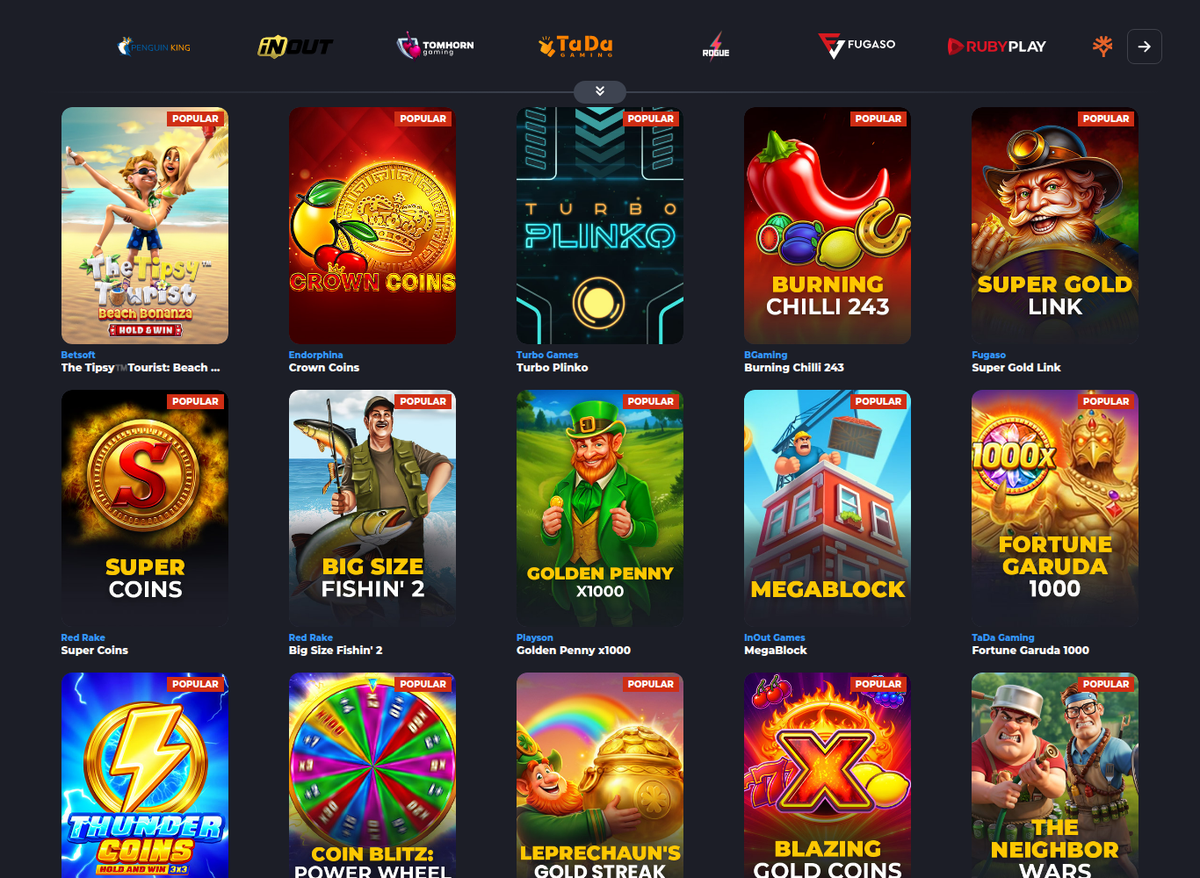
And what matters most to an Egyptian pocket: the same settings contain a rule saying that a user account in Egypt is opened in Egyptian pounds, not dollars. We found identity-verification thresholds written directly in pounds — 140,745 pounds for deposits and 23,457 for withdrawals — and a dedicated Evolution product tied to the Egyptian pound alone. Currency support here is not a button in a menu, it is structure built on it. What the platform does not publish is the exchange rate it uses, and that is a real gap: an account currency saves you a conversion, but you do not know at what rate.
We read the exclusion clause in full (clause 1.4 of the licensing agreement), and it bars residents of Curaçao, France and its territories, Malta, the Netherlands and its territories, North Korea, Portugal, Slovakia, Sweden, Switzerland, the United Kingdom and the United States and its territories. Egypt is not in it. The licence is its weak point: what it publishes is a sublicence, number 1668/JAZ, issued under the old “Curaçao e-Gaming” system, which has been wound up in favour of the new Curaçao Gaming Authority — and that number is not in the new register. What is in the new register, read on 8 September 2026, is a direct licence in the operator’s name, OGL/2024/1123/0641, which expired on 3 July 2026 and is recorded as “Assessment in progress” And a further wrinkle we found in our own review of the brand: the current end-user agreement names Blue Reef Solutions B.V. as the operator, at a different Willemstad address, where it previously named Y Enterprises B.V. Blue Reef Solutions does not appear in the register at all — so the entity the contract names today is not the entity the register knows.. The site says neither thing.
- Egypt named among 19 countries permitted to register, all of them Arab
- The Egyptian pound as an account currency, with verification thresholds published in pounds rather than dollars
- A full Arabic interface running right to left, and account verification by phone
- The published licence is a sublicence under the old Curaçao system, and the direct one in the register expired on 3 July 2026
- Terms and conditions in English only, and not one Egyptian payment method
Full detail — the licence, the withdrawal terms and what we measured ourselves — in our complete YYY Casino review.
BC.GAME — the Egyptian pound as currency, and Arabic in the contract rather than only the interface
The feature that separates it from most of this list is not on the front page but on the terms page: the terms and conditions themselves exist in Arabic, right to left, not a summary and not a marketing page. That is very rare. Most platforms translate the buttons and leave the contract — which is the only part you will actually need the day a dispute happens. It also has a dedicated path with an Egypt suffix, alongside the general Arabic one.
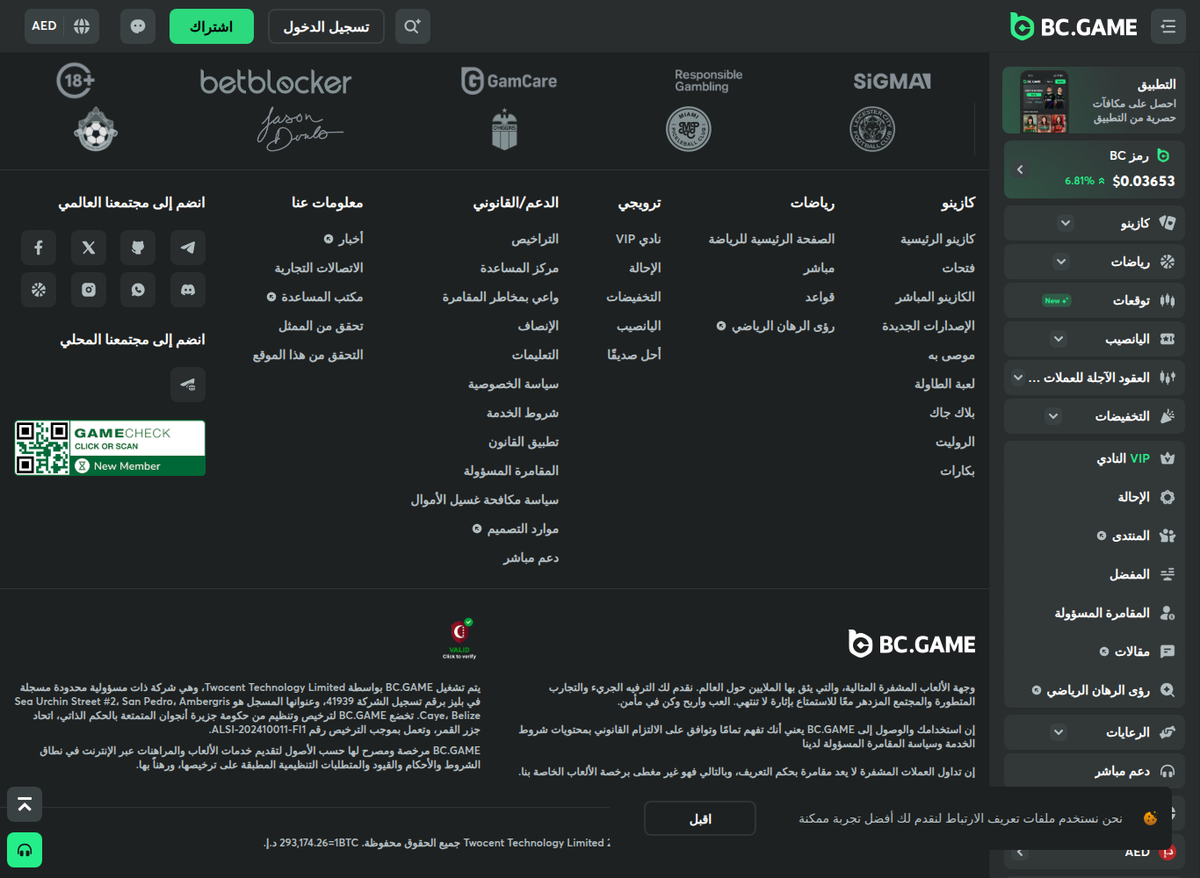
And in the platform settings we found the Egyptian pound enabled as a full cash currency — not a disabled symbol and not a hidden option — with two decimal places and visible to the user. You deposit, withdraw and see your balance in pounds. The rate, as everywhere else, is unpublished.
Clause 4.3 names the prohibited countries: Australia, Austria, France and its territories, Germany, the Netherlands and its territories, Spain, the Comoros, the United Kingdom, mainland China, Hong Kong, Macau and the United States and its territories. Egypt is not among them. But there are two open-ended phrases you should know about, and they sit in its anti-money-laundering policy rather than the terms: “all FATF-blacklisted countries”, and any other jurisdiction the Anjouan authority deems prohibited. The first does not reach Egypt — the blacklist today is three countries, Iran, North Korea and Myanmar, and Egypt is not among the jurisdictions under increased FATF monitoring either. The second is an unpublished list, and it means the platform reserves the right to add your country without announcing it. The licence is from the island of Anjouan, number ALSI-202410011-FI1, and the operating company is registered in Belize — and Anjouan has no public register in which you can match the number yourself, unlike Curaçao.
- The terms and conditions genuinely exist in Arabic, not the interface alone
- The Egyptian pound enabled as a visible cash currency, to two decimal places
- The prohibited-country list is readable in full, and Egypt is not in it
- Two open-ended clauses allow countries to be added without announcement
- The Anjouan licence has no public register against which to match the number
Full detail — the licence, the withdrawal terms and what we measured ourselves — in our complete BC.GAME review.
Rabona — the platform that targets Egypt hardest, and discloses least about itself
If the only test were “who treats the Egyptian as a market in his own right”, this would be first with no competition. We pulled its country list from its API — 121 countries — and found Egypt listed with its dialling code and, with it, three currencies: the Egyptian pound, the dollar and the euro. And here is the comparison that reveals the meaning: the Emirates, Saudi Arabia, Kuwait, Qatar, Morocco, Algeria, Tunisia, Jordan, Lebanon, Oman and Bahrain all appear with the dollar and the euro only, and Iraq does not appear at all. Egypt is the exception.
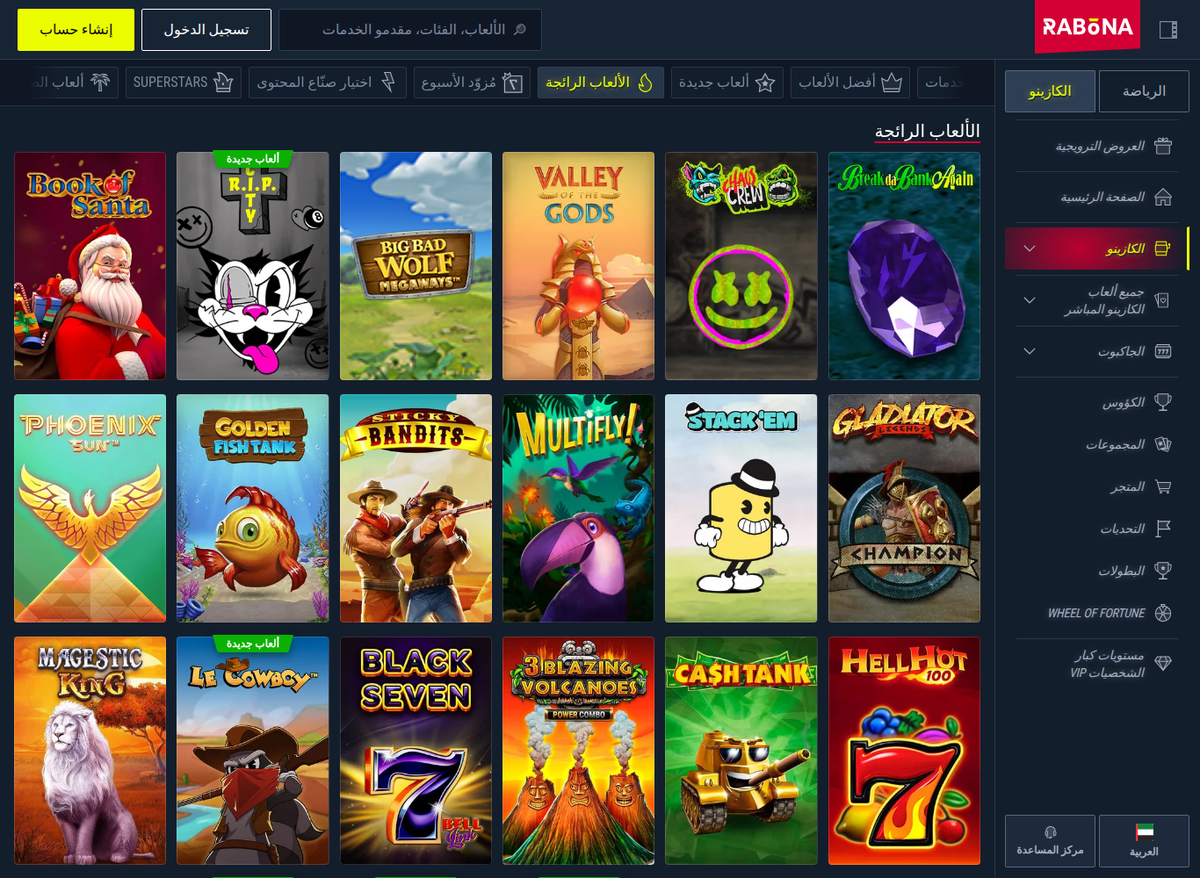
And the targeting goes beyond currency. The platform has two Arabic builds, not one: general Arabic, and a separate path dedicated to Egypt at its own address. The terms and conditions are genuinely translated — we read the Arabic version and it runs to more than eighty-six thousand characters, headed “General Terms and Conditions” with a version number matching the English. The exclusion list is in clause 2.3, in an edition updated on 19 August 2026, and covers Afghanistan, Belarus, Bulgaria, Curaçao, Cyprus, Denmark, Estonia, Iran, Israel, Lithuania, Malta, Moldova, Romania, Russia, North Korea, the Netherlands, Sweden, Ukraine, the United Kingdom, the United States, Côte d’Ivoire, Armenia and Georgia. Egypt is not in it. Even the promotion-restriction clause — which excludes Armenia, Tunisia, Bosnia, Indonesia, Georgia and Malaysia — does not mention Egypt, meaning the bonuses are open to you.
So why third and not first? For one reason, as serious as its strengths are distinctive: this platform publishes no licence at all. No number, no authority, not even the name of the operating company. We searched the footer and found only an addiction warning, an eighteen-plus notice and a copyright line; and we searched a hundred and eighty-nine thousand characters of terms for the word “licence” and found it only in the sense of “driving licence” among identity documents. Clause 1.4 defines “the Company” as “the company operating the site” — without naming it. In practice that means that if you fall out with it, you do not know which regulator to complain to, or whom to sue. The test we declared at the top of the page puts licence clarity ahead of quality of targeting, so it came down to here; had the ranking been on Egypt-specific fit alone, it would have led.
- One of the few countries for which accounts are opened in Egyptian pounds
- Two Arabic builds: general Arabic and a path dedicated to Egypt
- Terms and conditions fully translated into Arabic, more than 86,000 characters
- Promotions are not restricted for Egypt
- No licence published at all, and no operating company named anywhere
Full detail — the licence, the withdrawal terms and what we measured ourselves — in our complete Rabona review.
Roobet — the clearest licence on this list, matched in the regulator’s own register
Of the ten platforms on this page, this one holds the soundest licence, and we say so because we opened the register rather than because we read the footer. The stamp in the site footer is not an image but a link that opens a certificate on the regulator’s own domain. And in the Curaçao Gaming Authority licence register we counted ourselves, in the file dated 27 August 2026: the operating company is Raw Entertainment B.V., registered in Curaçao under commercial number 157205, licence OGL/2024/687/0427, category B2C, issued 24 December 2025, with the validity the register writes as Indefinite — no expiry date. It is entry 552 in that file, and entry 555 in the file dated 26 June 2026: the ordinal is a position in a list, not an identifier, which is exactly why a licence is checked by its own number.
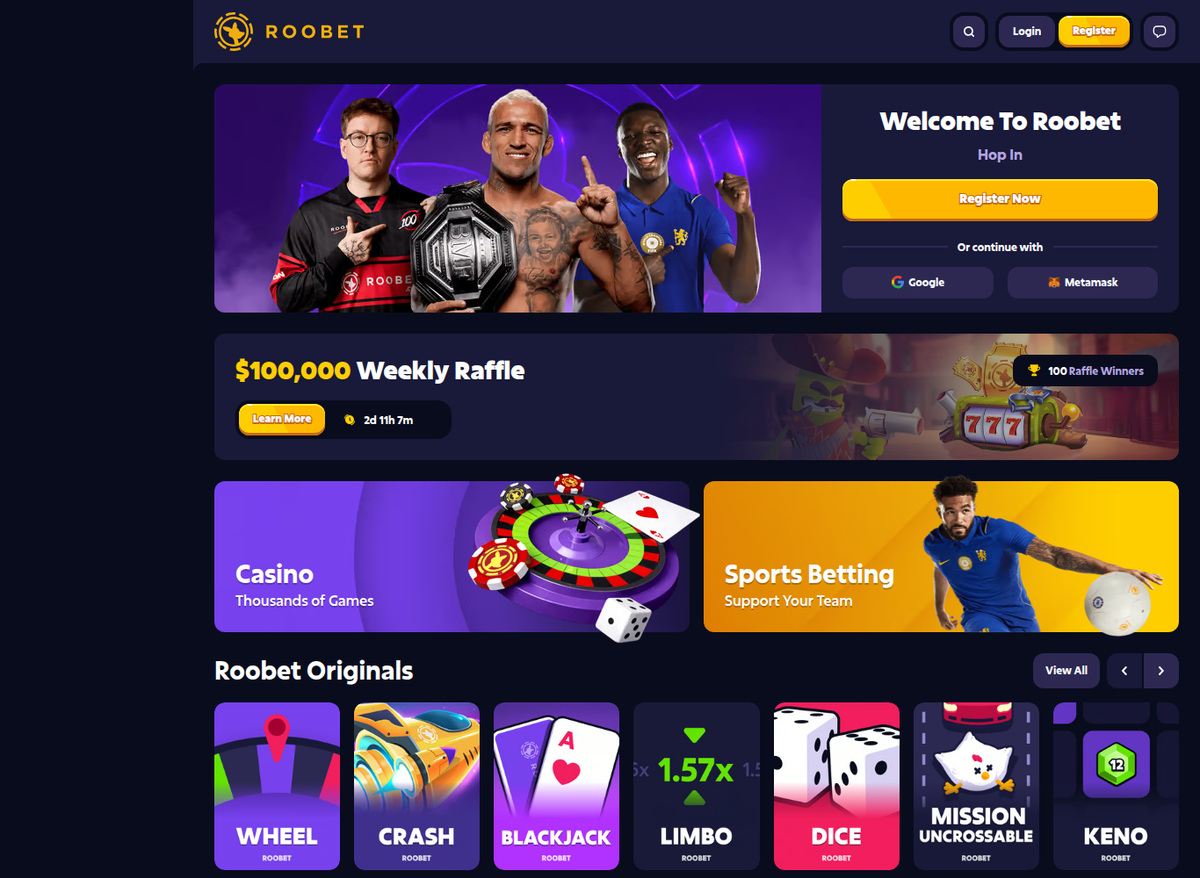
And its exclusion list is readable from two sources rather than one: clause 3.5 of the terms, then a live list the platform itself serves in its settings at browsing time, containing thirty-four jurisdictions. Egypt is in neither. That is the highest level of documentation we obtained for any platform here on the question of acceptance.
What keeps it from the top are two things that concern the Egyptian reader specifically. First: no Egyptian pound — the platform is built on cryptocurrency (Bitcoin, Ethereum, Litecoin, Ripple, Tether, Tron, Dogecoin, Solana and others), and its fiat path does not include the pound. That is not a detail in Egypt, where dealing in cryptocurrency is itself prohibited without a licence from the Central Bank, as we explain in the payments section. Second: its Arabic is an incomplete shell — we opened the Arabic path and found the page declaring its language as Arabic but without right-to-left direction, and we measured the terms page and found 1,275 Arabic characters out of roughly thirty-nine thousand. The contract is in English.
- The licence matched in the regulator’s own register, not a badge in a footer
- The exclusion list read from two sources, and Egypt is in neither
- Validity recorded as Indefinite, with the issue date published
- No Egyptian pound, and the platform is built on cryptocurrency that is prohibited locally
- The Arabic interface runs without correct direction, and the contract is in English
Full detail — the licence, the withdrawal terms and what we measured ourselves — in our complete Roobet review.
Betfinal — serious Arabic, and an exclusion list we read in a year-old copy
This is one of the clearest platforms in targeting the Arab reader: Arabic here is a first language rather than a translation, it runs live tables with Arab dealers, and its support works on the messaging channels common in the region. That is why you will find it near the top of our Gulf pages.
Its excluded-countries list is short — sixteen countries — and Egypt is not in it: Aruba, Australia, Austria, Bonaire, Curaçao, Saba, Sint Eustatius, the Netherlands, Belgium, France, Spain, Germany, Greece, the Czech Republic, Lithuania and the United States. But we have to be candid about two things. The first is that the text adds a catch-all: it also refuses “countries subject to sanctions”, which is open-ended wording even though Egypt is not under comprehensive sanctions. The second is that the copy we read this time is saved from August 2025, because the site would not open to us directly while this page was being prepared — which is consistent with our own connecting country being on its exclusion list. A full year is a long time in this sector, so treat it as information true to its date and not necessarily to today.
On the licence we have a correction to make to what we published before. The saved page names the operating company in Curaçao with commercial registration number 137397 and a payment agent in Cyprus, and says it works under an operating certificate from the gaming board — without publishing the licence number on that page. We had therefore written that it publishes no licence. Reading the register on 8 September 2026, that registration number leads straight to it: OGL/2024/420/0675, Final Enterprises N.V., which expired on 8 August 2026 and is recorded as “Assessment in progress”, entry 118. So it does have a licence in the register — and it is an expired one.
- Arabic as a first language, with live tables run by Arab dealers
- An exclusion list of sixteen countries, and Egypt is not in it
- The operating company and its commercial registration number are published
- The copy of the exclusion list we could read is saved from August 2025
- The licence in the register expired on 8 August 2026 and is recorded as “Assessment in progress”
Full detail — the licence, the withdrawal terms and what we measured ourselves — in our complete Betfinal review.
Stake — our highest score, and Arabic that does not go past the shell
This platform carries the highest score across all our reviews, and it is a score about library size, operating reputation and withdrawal speed — not about its fit for the Egyptian market specifically. We read clause 14.3 of its terms in full, and it contains forty-four prohibited jurisdictions — from Afghanistan, Argentina, Austria and Australia through France, Germany, Italy, Spain, Portugal and the United Kingdom, to Iran, Iraq, Libya and Syria. Egypt is not in it, and it is worth noticing that Sudan and South Sudan are named while Egypt is not: the exception is deliberate rather than an oversight.
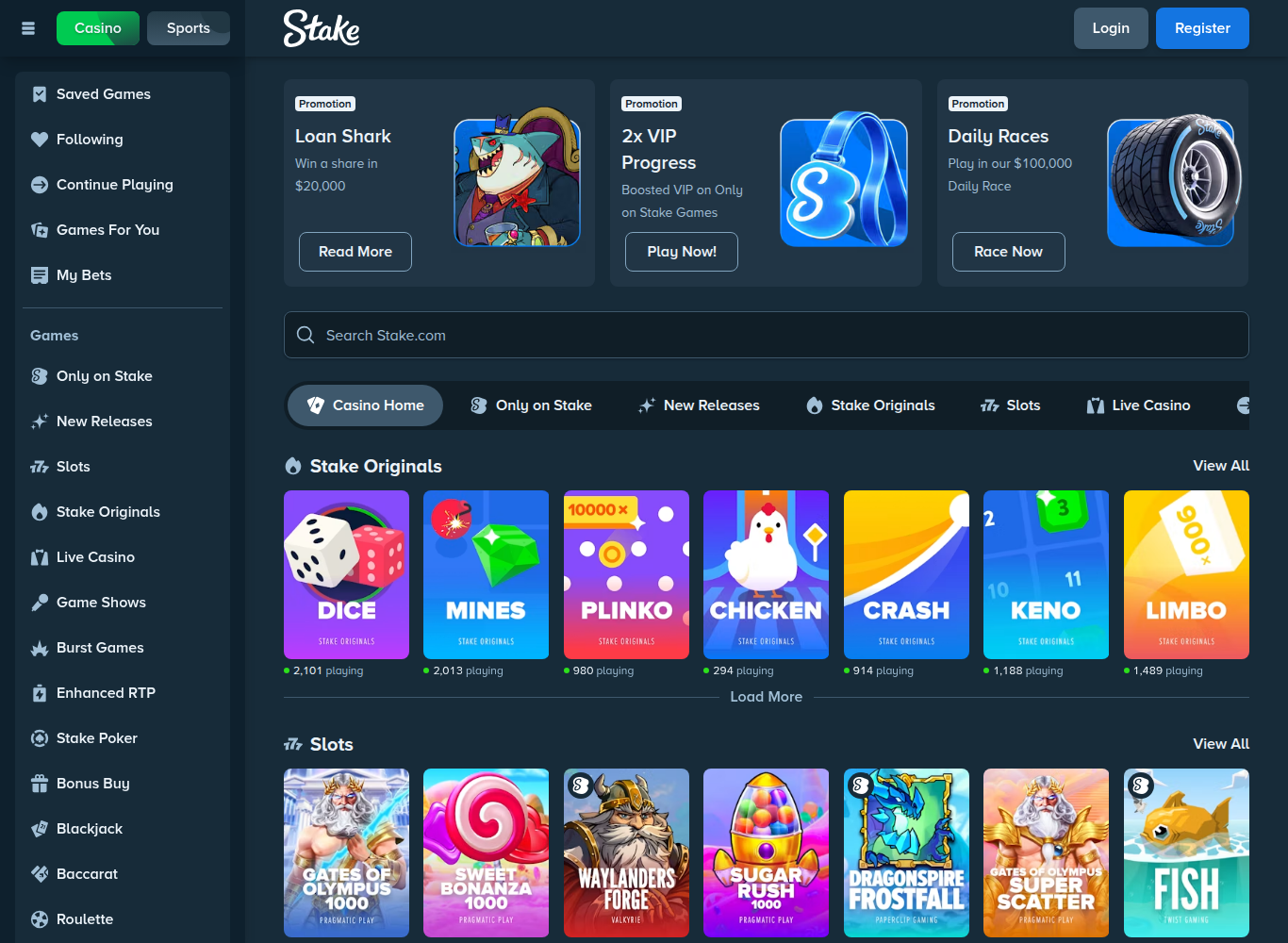
The weak point here is what we call “a flag that answers in English”. There is an Arabic path, and it serves translated menus, but we measured the terms page in Arabic and found 1,032 Arabic characters out of roughly fifty-four thousand — meaning what is translated is the page frame alone, and the whole contract is in English. Add that the platform is built on cryptocurrency, and we were not able to verify that it supports the Egyptian pound.
And on the licence we owe a correction, because we charge others on this page for the same thing. We had written that its published number could not be matched in a public register. Reading the register on 8 September 2026, it can: OGL/2024/1451/0918, Medium Rare N.V., company number 145353, entry 188 — with an expiry date of 9 June 2026 and a recorded status of “Assessment in progress”. It is the same state we mark Betfinal and RollingSlots down for, and it has to count here too.
- The highest score across our reviews: 4.7 out of 5
- The exclusion list read in full (44 jurisdictions), and Egypt is not in it
- The licence number, company name and payment agents are published
- The Arabic does not go past the page frame: the whole contract is in English
- The licence in the register expired on 9 June 2026 and is recorded as “Assessment in progress”
Full detail — the licence, the withdrawal terms and what we measured ourselves — in our complete Stake review.
BassBet — an exclusion list we read in full, and a closure clause that can void your balance
Its excluded-jurisdictions list is in clause 2.3, and we read it letter by letter: Afghanistan, Belarus, Bulgaria, Curaçao, Cyprus, Denmark, Estonia, Iran, Iraq, Israel, Lithuania, Malta, Moldova, Romania, Russia, the Netherlands, Sweden, Ukraine and the United Kingdom. Egypt is not in it. And note that Iraq is named while Egypt is not — which makes its absence information rather than a blank.
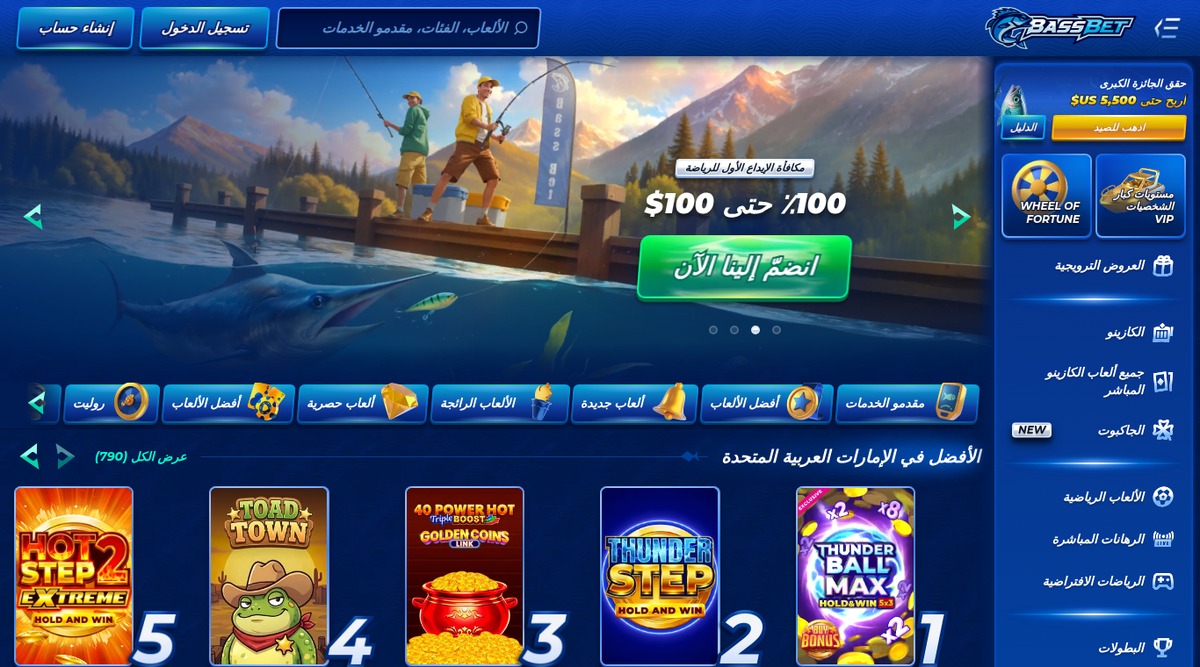
But the contract holds a clause we repeat a warning about in every review of this family of sites, because it goes past without anyone reading it: closing an account with a positive balance or a pending withdrawal request can void the money. The practical rule is simple — withdraw first, then ask to close, not the other way round. The platform also has a monthly withdrawal-limit table published in detail, which is in its favour, and an undeclared licence: no number, no company, no authority.
And in its terms there is a detail worth saying because it shows how these contracts get written: there is a whole clause regulating countries barred from NetEnt games by name — and that provider is not in the platform’s catalogue at all. Part of the contract is copied from a template that does not describe what you are actually buying.
- The exclusion list read in full, with Iraq in it and Egypt not
- Monthly withdrawal limits published in detail
- The licence is undeclared: no number, no company, no authority
- The closure clause can void your balance — withdraw before you ask to close
- Clauses copied about a provider that is not in the catalogue
Full detail — the licence, the withdrawal terms and what we measured ourselves — in our complete BassBet review.
Melbet — markets to the Egyptian league by name, and we could not read its terms
We place it here not because it is weaker than what sits above it, but because we could not read its exclusion list, and we do not build a ranking on a guess. All its official domains answered us with a geo-blocking page on every path we tried, the terms page included; and even the copies saved in the Internet Archive came back as blocking pages themselves, because the archive robot was blocked as we were. So we cannot say “Egypt is not on the list”, and we cannot say the opposite.
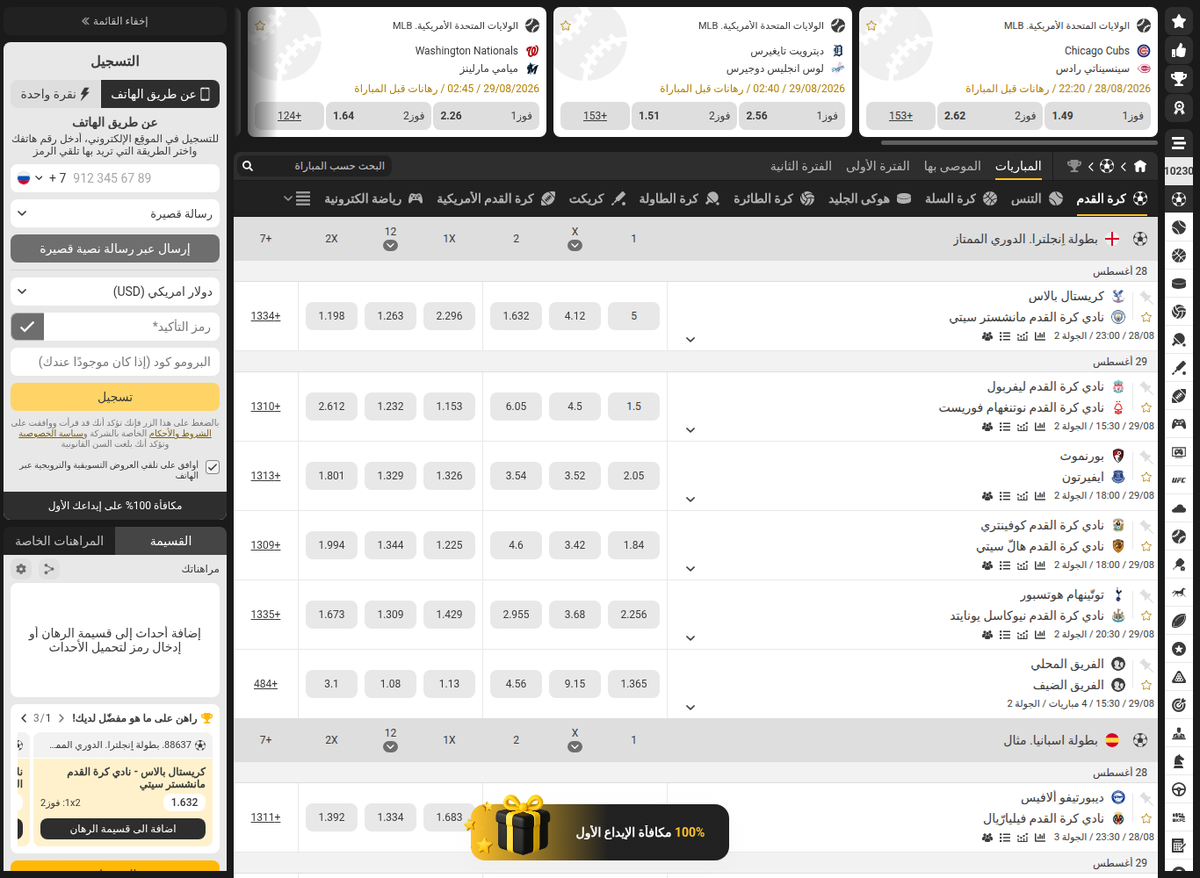
What we can document is a marketing indicator rather than a legal finding: the archive index holds, on the platform’s official domain, an Arabic promotion terms page dedicated to the Egyptian Premier League, saved in December 2025. A platform that writes an Arabic offer in the name of the Egyptian league knows exactly who it is addressing. But marketing is not acceptance, and the gap between them is precisely what you discover on withdrawal day rather than deposit day.
One correction on the licence, in its favour: reading the Curaçao register on 8 September 2026, its licence is there and current — OGL/2024/561/0554, Pelican Entertainment B.V., company number 134359, issued 24 December 2025, validity written as Indefinite, entry 445. That does not tell us whether it accepts Egypt, which is a separate question, but it does mean its regulatory position is among the stronger ones here.
An important practical warning: searching for this brand you will land on domains carrying its name with an Egypt suffix, showing sound Arabic and promising the Egyptian pound and local payment methods. We examined one and found nothing linking it to any official domain of the platform, and no links except to social media accounts. Do not deposit at a domain because it carries the name. We do not treat those sites as a source and have not built a single word here on them.
- A low minimum deposit, and a broad sportsbook in Arabic
- An Arabic promotion page in the name of the Egyptian Premier League on its official domain
- The licence is in the register with validity written as Indefinite
- The excluded-countries list was not read — we neither confirm nor deny that Egypt is accepted
- Unofficial domains carry the name and promise the pound — avoid them
Full detail — the licence, the withdrawal terms and what we measured ourselves — in our complete Melbet review.
10Bet — good Arabic interface, and an exclusion list we reached at last
The Arabic interface at this brand is among the best on the list, and its sportsbook is serious. An update: we had written here that we had not reached its excluded-countries list. We reached it while preparing our Iraq page, through its alternate build, and read clause 3.1 in full: it contains around sixty jurisdictions, among them Iraq, Jordan, Lebanon, Libya, the Palestinian Authority, Sudan, Syria and Yemen — and Egypt is not among them. That is in the Egyptian reader’s favour, but we add the reservation the text itself imposes: the list is framed with “including, but not limited to”, that is, it is open-ended, so the absence of your country from it is not a guarantee.

And a correction on the licence, in its favour. We had written that we could not match its published number in the public register. Reading the register on 8 September 2026, we can: OGL/2024/418/0821, Sunstar Impact N.V., company number 152448, issued 19 May 2026, validity written as Indefinite, entry 238. What follows remains true as we wrote it: its international domain answered us on every path with a “restricted country” page saying plainly that it does not serve bettors from our country.
And we flag a common confusion: there is a British domain carrying the same name that opens without trouble and whose terms are complete and readable — but it is a different entity, licensed by the British Gambling Commission, and it serves only residents of the United Kingdom. Anyone who reads that domain’s terms thinking they are the international platform’s is building on an entirely wrong footing. We did not, and we do not advise you to.
- A full Arabic interface running right to left
- A strong sportsbook
- Clause 3.1 read in full and Egypt is not in it — but the list is open-ended
- The licence matched in the register: entry 238, validity Indefinite
- The international domain answers with a “restricted country” page on every path
- The British domain is another entity that does not serve Egypt — do not read its terms as these
Full detail — the licence, the withdrawal terms and what we measured ourselves — in our complete 10Bet review.
RollingSlots — the only one on this list that names Egypt among the banned
We place it last, and we give the reason in the first line without hedging: its account-opening terms (clause 2.7) list Egypt by name among the countries whose residents it says may not open an account. That list runs to well over a hundred names, close to half the world, and among them are Algeria, Iraq, Jordan, Lebanon, Libya, Morocco, Palestine, Syria, Tunisia and Yemen. It is the only one of the ten that does this. Nothing that comes after this sentence changes it.
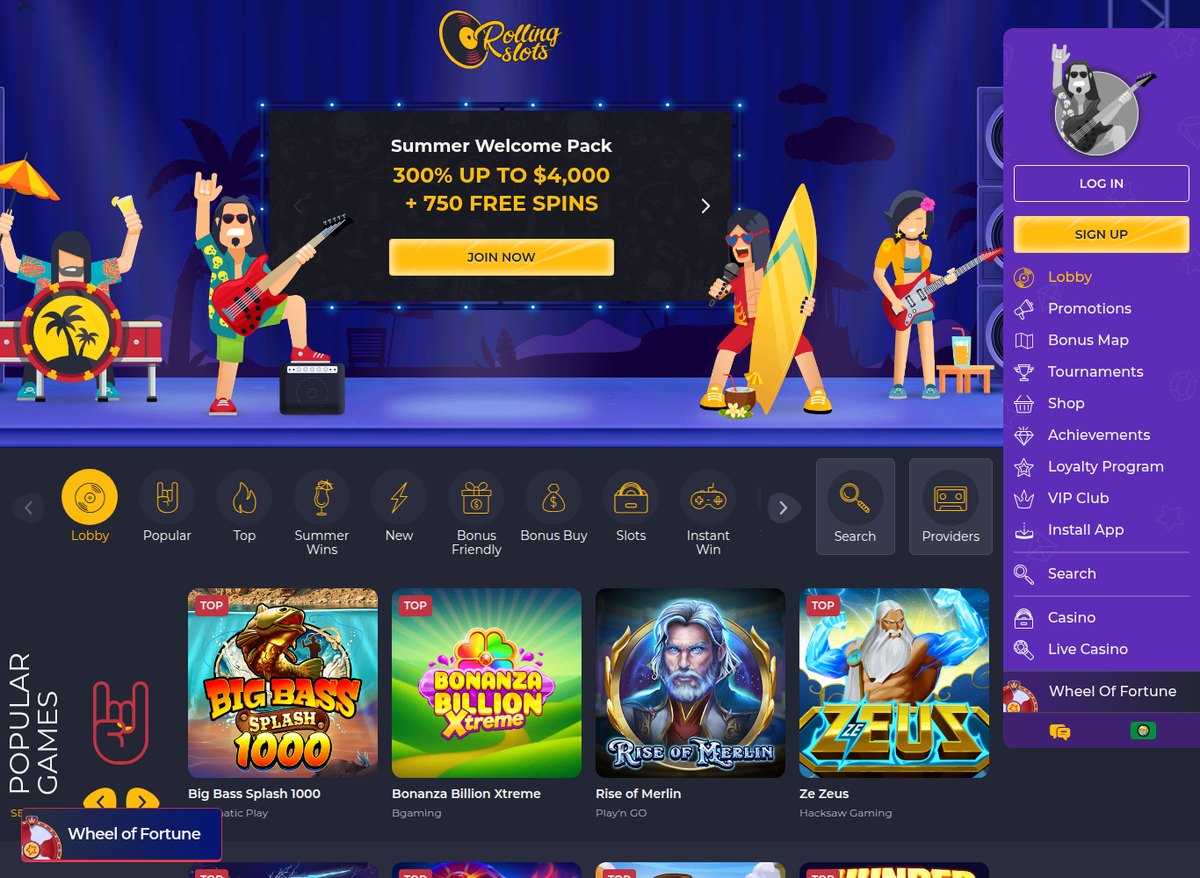
We keep it listed here for two reasons. The first is that our reader will certainly run into it — it advertises the largest welcome bonus in this market, and many pages recommend it to Egyptians without reading its contract. The second is that, in regulatory terms, it is not weak: we matched its licence in the public register in its company’s name and registration number — OGL/2024/589/0556, GBL Solutions N.V., company 155090, entry 292 — though we should say the rest of that entry too, since we say it about others: it expired on 14 April 2026 and is recorded as “Assessment in progress”. So: not a bad platform. A platform that does not want you.
And for anyone asking “what if I register anyway?” — the answer is that the danger is not in opening the account but in closing it: a platform that lists your country among the banned reserves the right to cancel the account and confiscate balances at identity verification, and that verification usually happens at the first large withdrawal rather than at deposit. Its conditions are also among the heaviest on the list: a wagering requirement of forty-five times, a bonus that expires within five days, and an anti-money-laundering clause requiring you to have wagered three times the value of your deposits before any withdrawal — which applies even with no bonus at all.
- The licence matched in a public register in the company name and registration number
- The largest advertised welcome bonus on this list
- Egypt named in the clause on countries barred from opening an account (2.7)
- A 45x wagering requirement, and a bonus that expires within five days
- The licence expired on 14 April 2026 and is recorded as “Assessment in progress”
Full detail — the licence, the withdrawal terms and what we measured ourselves — in our complete RollingSlots review.
The Egyptian Pound — the cost you pay before you play
This is the section you will not find on pages translated from English, and in Egypt it matters more than the whole bonuses section. When you deposit from Egypt you are not doing one transaction but three: a conversion on the way in, a wager, then a conversion on the way out. The first and the last eat into your capital before a single reel turns.
Let us put the numbers in front of you. The currency closed 2023 at about 30.93 pounds to the dollar, after the Central Bank had held it steady for close to a year. On 6 March 2024 the Central Bank stopped defending the rate and moved to a flexible regime, and within days the pound settled near 50 pounds to the dollar — a fall of about 38% in one go. And in 2026 it moves in a wide band: the lowest point we recorded was 46.63 on 15 February and the highest 54.69 on 7 April, and in August it is near fifty. Since the start of 2022 the currency has lost more than seventy per cent of its value.
What does that mean in practice? It means that a bonus advertised in dollars is not a fixed number for you. A “hundred dollar” offer in February 2026 was worth 4,663 pounds; the same offer in April became 5,469 pounds. The bonus did not change — you did. And when the contract requires you to wager thirty-five times, you are turning over an amount denominated in a currency that moves under you for the whole period. Add annual urban inflation that reached 14.9% in July 2026, and a Central Bank overnight deposit rate of 19% (the discount rate is 19.5%) — meaning money left sitting in a gambling account has a real opportunity cost and not a theoretical one.
That is why we gave heavy weight on this page to one question: does the platform open an account in Egyptian pounds? Only three of the ten do — YYY Casino, BC.GAME and Rabona — and that saves you at least one conversion. But note the other side: not one of them publishes the exchange rate it uses. An account currency protects you from a visible bank charge; it does not protect you from a hidden spread. Ask support for the rate before you deposit, and keep the answer.
Casino Bonuses — and how to read the terms before you accept
A bonus is not a gift, it is a contract. The big number in the advertisement is the bait, and the terms underneath it are the deal. And in Egypt a third layer is added that exists nowhere else: the bonus is denominated in a currency that is not yours, so read it in pounds rather than in dollars.
Welcome bonus
A percentage added to your first deposit. The advertised figure means nothing on its own; what means something is three things: the wagering requirement (how many times you turn the money over before it becomes withdrawable), the period (how many days you have), and the maximum single stake while turning it over. The largest offer on our list is advertised by a platform that lists Egypt among the banned — so it does not concern you.
No deposit bonus
Credit or spins granted without paying. Rare and small, and the conditions for withdrawing them are usually heavier than a deposit bonus rather than lighter. Read the cap on winnings you are allowed to withdraw from it — it is usually very low.
Reload and cashback
The first is a percentage on a later deposit rather than the first; the second is a percentage returned to you out of your losses. Cashback is usually the most honest of the offer types, because it is computed on what you actually lost. And the decisive question about it: is it cash withdrawable immediately, or bonus credit subject to a fresh wagering requirement? The difference between those is the difference between an offer and a trick.
Bonuses with no wagering requirement
The best thing you can take, meaning what you win from it is withdrawable directly. And it is rarer than the advertisements suggest, so make sure the phrase applies to the spins and their winnings together, not to the spins alone.
VIP club and high-roller perks
Tier programmes that give higher cashback, faster withdrawals and wider limits. The practical observation is that they are measured by the volume you turn over rather than by what you win — that is, they reward persistence, not winning. If you play on a small monthly budget, they are not for you and should not enter your calculation when choosing.
And a last rule specific to Egypt: platforms that open an account in pounds do not always compute the bonus in pounds. Check the currency of the bonus itself, not only the currency of the account — it may be granted in dollars and turned over in pounds, and that is where the spread shows up twice.
How to Choose an Online Casino from Egypt
The licence: a number in a register, not a badge in a footer
No Egyptian authority licenses these platforms or supervises them — and the licensed land-based floors inside hotels are closed to you by the text of the law, as you will see in the legal section below. So the offshore licence is the only layer of protection, it protects you from the operator rather than from Egyptian law, and only to the extent it is real. Here is where the ten stand, read in the Curaçao register on 8 September 2026: three are current, with validity written as Indefinite — Roobet, Melbet and 10Bet. Four are in the register with expired licences recorded as “Assessment in progress” — Stake (9 June 2026), YYY (3 July 2026), Betfinal (8 August 2026) and RollingSlots (14 April 2026). One publishes an Anjouan licence with no public register to check it against (BC.GAME). And two publish no licence we can verify at all (Rabona and BassBet). The practical test is simple: click the seal in the footer. If it does not open a certificate on the regulator’s domain, it is a picture and not a document.
And a note on how to read that register, because it is easy to draw the wrong conclusion from it. In the file dated 27 August 2026 there are 661 entries, of which 312 are “Assessment in progress”, 48 revoked and 32 expired, while 204 carry the positive status the register writes as “Indefinite”. This is the state of a whole licensing system in transition, not the state of one struggling company — which is why “Curaçao” in a footer should be read as a number in a register rather than a badge.
Identity verification and withdrawal times — where every dispute is settled
This is the paragraph everyone skips, and it is the one you will need. Verification does not happen at deposit but at withdrawal, and usually at the first large withdrawal. Ask before you deposit: what documents are required? Is proof of address in Arabic accepted? How long does it take? And what are the daily and monthly withdrawal limits before verification and after? A platform that publishes these numbers respects you; a platform that hides them is leaving itself room.
Currency: the cost you pay twice
See the section above. Three of the ten open the account in Egyptian pounds, and seven open it in dollars or euros — which means a conversion on deposit and another on withdrawal. And not one of the three publishes the exchange rate.
Arabic: the interface only, or the contract too?
Distinguish three grades, because they differ greatly on the day of a dispute. A platform with no Arabic at all; a platform that translates the interface and leaves the contract in English — and this is the commonest case, which we measured in numbers at Stake and Roobet; and a platform that translates the contract itself, which is very rare: BC.GAME and Rabona alone on this list publish the terms and conditions in Arabic. The difference is not cosmetic: you are agreeing to the text you cannot read.
Responsible gambling tools
Ask for these four by name before you deposit: a deposit limit, a loss limit, a cool-off period and self-exclusion. And note the difference between a tool you set yourself from inside the account and one that has to be requested from support by ticket — the second usually fails at the moment you need it. And if you are chasing a loss, the tool you need is not a better bonus but stopping.
Popular Online Casino Games
Slots

The largest section on any platform, and the most variable in return to player. Read the return figure for each title rather than for the studio as a whole — a single studio produces games ranging between 92% and 97%, and the gap between those is large over the long run. And you will find an abundant number of pharaonic-themed titles on these platforms — which is a marketing label and nothing more, with no bearing on the return figure or on your chances.
Live dealer tables

Blackjack, roulette and baccarat streamed live from a real studio. And this is exactly where the difference shows between a platform that buys from the front rank and one that settles for what is cheaper: the presence or absence of Evolution is the sharpest practical indicator of how serious a live section is. Note also whether there are tables with Arabic-speaking dealers — something only a few of these platforms offer.
Crash games

A multiplier that climbs until it collapses, and you have to cash out before it does. Simple in rules and fast in rhythm, which is why they are the most heavily advertised in this region. And that same speed is their danger: the number of rounds per hour is far greater than in any other game, meaning the house edge works on you faster.
Classic table games

Roulette, blackjack and baccarat in software versions. The best of them in theoretical return is blackjack on good rules, but that assumes correct play rather than intuition. And single-zero roulette is always better for you than double-zero — a choice the table itself offers you and which costs you nothing.
Sports betting

Most of these platforms combine casino and sport in one account. And the rule that has held in every market we measured: the margin on the local league is wider than on the major European leagues, because liquidity is lower and information narrower. We could not measure the Egyptian Premier League margin ourselves while preparing this page, because the two strongest platforms in that department are geo-blocked from us — so we publish no figure we did not measure. But make it a practical rule: compare the same odds on a local match and a European match before you bet, and the gap will show itself to you.
The Studios Behind These Lobbies
A platform usually does not make its games, it buys them. And who it buys from says more about it than its design does: the provider list is the fastest check on how serious any site is, and it is information shown to you free before you register. Note too that the catalogue differs from country to country on the same platform — what you see from Egypt is not necessarily what someone else sees.
The global reference in live dealer tables. Its presence or absence is the sharpest indicator of how serious a platform’s live section is, and it is the provider for which we found, at one of the platforms on this list, a product tied to the Egyptian pound alone.
One of the most widely distributed studios in the region, and the maker of the best-known crash and fast-slot titles. Its availability changes from country to country on the same platform, so check that it appears in the provider list while you are connected from Egypt rather than from somewhere else.
A Scandinavian slots studio with a settled reputation for high volatility, and the maker of one of the best-known pharaonic-themed slot series. Finding it in a provider list tells you the platform buys from the front rank rather than the cheapest.
Prolific and uneven in quality, and the backbone of several catalogues on this list. Read the return figure for each title rather than for the studio as a whole — the spread between its games is wide.
Payment Methods from Egypt — and why they are the real obstacle
We start with what no other page says: we did not find a single Egyptian payment method at any platform whose cashier we were able to inspect. No Fawry, no InstaPay, no Vodafone Cash, no Meeza cards. Anyone who promises you otherwise is either copying from an old page or talking about an unofficial domain that carries the brand name without belonging to it.
And this is structure rather than coincidence. Egyptian payment methods are designed for the inside: Meeza cards are a domestic network that does not work outside the country at all; InstaPay is the Central Bank’s instant payments network, which moves money between Egyptian accounts and receives transfers from abroad, and is not used to pay a foreign merchant; Fawry is a domestic collection network in pounds; and mobile wallets such as Vodafone Cash are wallets licensed by the Central Bank with daily and monthly limits, built to receive transfers and to pay domestically. The wall is not a text banning gambling — it is a structure the pound does not leave.

International cards — the only nearly practical route, and it has a ceiling
The international bank card is the route most players actually use. And its history is worth knowing: during the crisis years the Central Bank imposed a ceiling on foreign-currency spending outside the country that reached 250 dollars a month. It has since been widened and the proof-of-travel requirement dropped, but the limits did not disappear — they moved to the banks: each bank has its own ceilings, some of them very low, and on top of them comes the foreign-currency acquisition fee, which exceeded 10% at the peak of the crisis and has come down to around 3% at the major banks. Ask your own bank about your own ceiling — and do not believe any single figure published as a national rule, because there is no single rule.

Cryptocurrency — and here we have to be candid
Most platforms on this list are built on cryptocurrency, and it is the fastest and least frictional route in most markets. But in Egypt it has to be said plainly: article 206 of the Central Bank and Banking System Law No. 194 of 2020 prohibits issuing, trading in, promoting cryptocurrencies or operating platforms for them without prior authorisation from the Central Bank — and the Central Bank has granted no such authorisation. The practical effect is a ban. And for whoever it concerns, there is a religious dimension: the Egyptian Dar al-Ifta has issued a fatwa that dealing in Bitcoin is not permissible.

International wallets
Wallets such as Skrill and Neteller work as an intermediate layer between your card and the platform, and hide the recipient’s name from your bank statement. An important financial warning: you are converting twice — once from the pound into the wallet’s currency, and once from the wallet into the account currency — and each conversion has its spread. And some of these wallets charge an inactivity fee on an unused account. Do not open a wallet for a single transaction.

And the section in one sentence: in the Gulf the obstacle is that the platform may not accept you; in Egypt the platforms accept you, and the obstacle is that your money cannot easily reach them, or come back. And the return journey specifically — an amount entering your Egyptian account — is what invites the question about its source, as we explain below.
New Online Casinos Entering the Market
The market changes faster than any page, and most of what is “new” in it is not new: it is a new front end on an existing platform, with the same catalogue, the same terms and sometimes the same clause numbering. We have seen that with our own eyes in more than one family of sites, and written it in our reviews. The test we use, and which you can use in two minutes: compare the provider list, then open the terms page and look for one particular clause number — if the numbering matches, you are looking at the same platform in another colour.
And in Egypt specifically add a second test after February 2026: a new domain may simply be an alternate domain for a blocked site, not a new brand. The difference is that in the second case you are dealing with a known entity on known terms, and in the first with an unknown. Do not deposit at a domain merely because it carries a name you know or promises local payment methods — verify that the domain is genuinely connected to the brand rather than merely resembling it.
Is Online Casino Legal in Egypt?
The short answer: no, and no Egyptian authority licenses this activity online. But the short answer alone is more misleading here than in any other country we have covered, because the Egyptian picture has three elements you do not find together anywhere: legal land-based gambling that is barred to Egyptians, criminal texts that pursue whoever runs the place rather than whoever plays, and a financial wall that is the actual obstacle. We set them out with the texts.
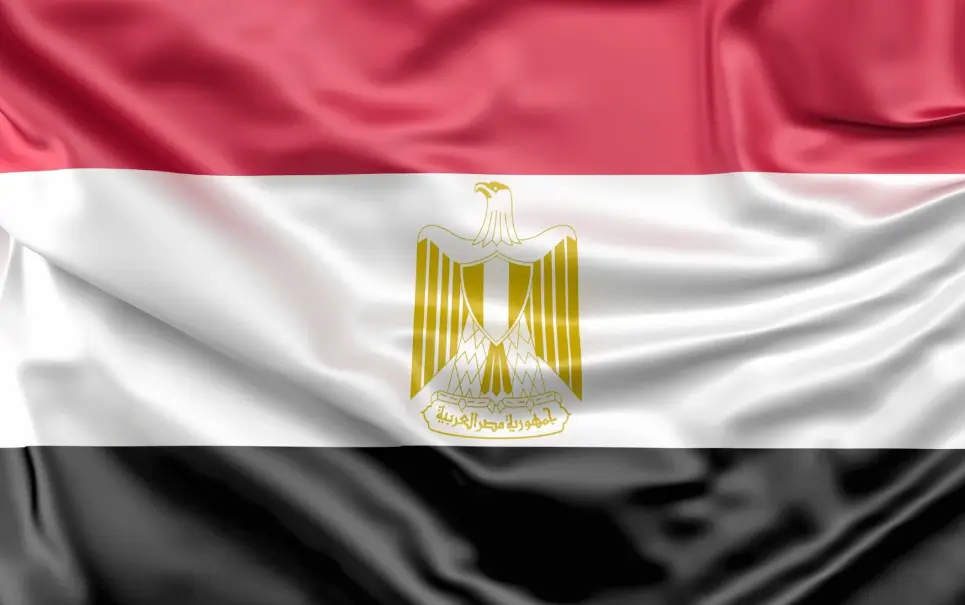
Gambling floors inside hotels: legal, and barred to you
Gambling floors have operated for decades inside major hotels in Cairo, Hurghada and Sharm el-Sheikh. Their basis today is article 24 of the Hotel and Tourist Establishments Law No. 8 of 2022, which reads (our translation):
Gambling games may not be practised in the establishments except by non-Egyptians, in accordance with the conditions and controls issued by decision of the competent Minister, provided that this decision determines the establishments in which gambling games may be practised and the royalty due on them, not exceeding half of the revenues of the gambling games.
So the state permits the activity, determines its establishments by ministerial decision, and takes a royalty that may reach half the revenue — and excludes Egyptians from practising it.
And here we correct a mistake common to everything written in Arabic and English on this file: most sources still refer to Law No. 1 of 1973, which is repealed — expressly repealed by article 4 of the 2022 law. And the difference has consequences: the 1973 text included restricting entry to those places to non-Egyptians and requiring dealings there to be in foreign currency, and neither of those phrases carried over into the 2022 text, which confines itself to barring Egyptians from “practising” and refers the conditions to a ministerial decision. As for requiring a foreign passport at the door, that is a practice in operation at the floors, and we did not find its basis in the text in force. We say what is in the text, and we say where our knowledge ends.
The Penal Code: article 352 pursues whoever prepares the place
The basic criminal text is article 352: “whoever prepares a place for games of gambling and makes it ready for people to enter shall be punished, he and the money-changers of the said establishment” — with imprisonment and a fine not exceeding a thousand pounds, together with confiscation of the money and instruments found in the place. Read whom the text addresses: whoever prepared the place, and its money-changers. That is, the operator and whoever exchanges the chips, not the individual player. And article 353 punishes with the same penalties whoever offers something for sale in a lottery “without the government’s permission” — a phrase that reveals that a licensed lottery is permitted rather than forbidden in itself.
And we flag what we cannot confirm: many pages attribute other articles (354, 355 and 356) to the gambling chapter, and we found no basis for that in a reliable source, so we do not cite them. And we add an observation with practical meaning: the thousand-pound fine has not been updated since it was written, and today it is around twenty dollars.
The text that used to pursue the player — and has been repealed
This is the most precise point in the whole file, and the one most often got wrong. Law No. 371 of 1956 on public establishments prohibited playing gambling in public establishments and punished it, and the Court of Cassation ruled in 1964 that the prohibition covered “everyone, whether those who run these establishments or those who frequent them and play in them”. But that law was repealed by Law No. 154 of 2019. In the law now in force, gambling appears in article 24 as a ground for administrative closure of the establishment, and the penalties (a fine of twenty to fifty thousand pounds, and imprisonment on repetition) are directed at whoever operates the establishment.
And the conclusion we stop at, cautiously: the Egyptian criminal structure in this area rests on the place and whoever runs it, not on the individual act in a closed house or on a phone. We do not offer this as legal advice, and we do not tell you that you are safe; we say that the texts we read address the operator, and that the text which used to address the player in a public establishment has been repealed.
The Information Technology Crimes Law No. 175 of 2018
Here the state’s tools turn to the internet. Article 7 allows the investigating authority to order a site blocked where evidence exists that it broadcasts something constituting a crime or threatening national security or the national economy, provided the order is put to the court within twenty-four hours and decided within seventy-two; and in cases of urgent danger the competent administrative body is notified for immediate temporary blocking. And article 27 is the text that actually reaches this sector:
Whoever creates, administers or uses a site or a private account with the intent of committing an offence punishable by law, or facilitating it, shall be punished with imprisonment for not less than two years and a fine of not less than one hundred thousand and not more than three hundred thousand pounds, or one of these two penalties.
Note the direction of the text and the size of the fine: the state aims at operators and intermediaries, with fines equal to hundreds of times the article 352 fine aimed at a gambling floor.
And in February 2026 the blocking of betting sites was announced by the chairman of the parliamentary communications and information technology committee, with the National Telecom Regulatory Authority to carry it out. A wider legislative proposal is also being discussed, said to include penalties for users who reach blocked platforms — and we say it plainly: that is a proposal that had not been enacted at the time of writing, and it may not be spoken of as law in force. But it is a direction worth following, because it would change what we wrote in the previous paragraph if it passes.
And what about VPNs?
Because nearly every competing page repeats that “using a VPN is a crime in Egypt”, we examined the text of Law 175 of 2018 word by word looking for “VPN”, “virtual private network”, “encryption” or “circumventing blocking”: none of them is in the text. The article usually relied on for that claim concerns using broadcast channels or frequencies without a telecommunications licence, which is a different matter; and article 14 concerns unlawful access to a system or account — that is, hacking, not visiting a blocked site.
Honesty requires saying both things together: there is no text criminalising the use of virtual private networks in this law, and no text protecting it either, and the wording of article 27 is broad. And what we consider more important than the whole argument: you are not blocked from withdrawing, you are blocked from access — and the problem you will meet is not opening the site but getting the money out of it.
Where the real risk lies: the money, not the play
The heaviest thing in the file is not the Penal Code fine, but the Anti-Money Laundering Law No. 80 of 2002. Its definition of the “predicate offence” is broad: any act constituting a felony or misdemeanour under Egyptian law, extending to what is committed abroad if it is criminal in both countries — with no penalty threshold. And gambling offences are misdemeanours, so they enter through the general definition rather than by express mention. The penalty reaches seven years and a fine equal to twice the amount involved.
This does not mean that depositing lawful money makes you a money launderer. But it does mean that the question comes on the return journey: when an amount enters your Egyptian account and you are asked where it came from. And this is the point where all the threads of this page meet — the financial wall, the card ceilings, and the cryptocurrency prohibition in article 206 of Law 194 of 2020. The risk in practice is on the money route, not in sitting in front of the screen.
What is actually licensed in Egypt
To complete the picture: there is a legal framework for lotteries in Law No. 93 of 1973, which repealed the 1905 law and under which competitions and charitable lotteries are licensed through the Ministry of Social Solidarity — we found no published repeal of it, though we could not confirm its current standing in the Official Gazette. There are also horse racing bets in the racing clubs of Cairo and Alexandria, under the umbrella of the higher authority for horse racing. So Egypt is not a country that bans everything; it is a country that licenses particular forms and leaves everything else outside the framework.
And we flag, finally, a piece of false information that circulates on English-language pages: an “Egyptian sports betting authority” granting licences is frequently mentioned. We searched for it and found no official trace whatsoever, and it appears only on marketing sites copying one another. There is no Egyptian body licensing sports betting online. The same goes for the claim that the 2018 law “regulated sports betting” — that law is the information technology crimes law, and there is not one letter in it about licensing gambling.
FAQs — Online Casinos in Egypt
No, and no Egyptian authority licenses this activity online. Article 352 of the Penal Code punishes “whoever prepares a place for games of gambling and makes it ready for people to enter… he and the money-changers of the said establishment” with imprisonment and a fine not exceeding a thousand pounds, together with confiscation; and article 353 punishes an unauthorised lottery. In February 2026 the blocking of betting sites was announced, to be carried out by the National Telecom Regulatory Authority. Note that the text of 352 addresses whoever prepares the place and its money-changers, not the individual player.
Yes, and this is what distinguishes Egypt from every Gulf state. Gambling floors operate inside major hotels under article 24 of the Hotel and Tourist Establishments Law No. 8 of 2022, which determines the permitted establishments by ministerial decision and imposes a royalty that may reach half the gambling revenues. But the text itself says: “gambling games may not be practised in the establishments except by non-Egyptians”. They are legal and barred to you at the same time.
It was, and it no longer is. Law No. 1 of 1973 was repealed by article 4 of Law No. 8 of 2022, and yet most Arabic and English sources still refer to it. The difference is not formal: the 1973 text restricted entry to those places to non-Egyptians and required dealings in foreign currency, and neither phrase exists in the 2022 text. Requiring a foreign passport at the door is a practice in operation whose basis we did not find in the text in force.
The texts we read address whoever runs the place. Law 371 of 1956 used to punish playing in public establishments, and the Court of Cassation ruled in 1964 that it covered the patrons and not only the managers — but that law was repealed by Law 154 of 2019, in which gambling became a ground for administrative closure with penalties directed at “whoever operates an establishment”, a fine of twenty to fifty thousand pounds. The whole structure rests on the place and whoever runs it. This is not legal advice, and it does not mean you are safe.
We separate three cases and do not mix them. Direct documentation of acceptance: YYY Casino names Egypt among nineteen countries permitted to register, and Rabona lists it in its country list together with the Egyptian pound. We read the exclusion list in full and did not find Egypt: Stake, Roobet, BC.GAME, BassBet and Betfinal (in a copy saved from August 2025). And we read 10Bet’s list through its alternate build and did not find Egypt, with the reservation that clause 3.1 is framed in open-ended terms. One remains whose list we could not read, so we neither confirm nor deny: Melbet, geo-blocked from us even in the archive. And one case excludes Egypt by name: RollingSlots, in clause 2.7.
Three of the ten: YYY Casino, BC.GAME and Rabona. And that is a striking exception — the Emirates, Saudi Arabia, Kuwait, Qatar, Oman, Bahrain, Morocco, Algeria, Tunisia, Jordan and Lebanon all appear at Rabona with the dollar and the euro only, and Egypt alone with its own currency. But note: not one of the three publishes the exchange rate it uses. An account currency saves you a bank conversion; it does not protect you from a hidden spread. Ask support for the rate before you deposit.
We found not one at any platform whose cashier we were able to inspect: no Fawry, no InstaPay, no Vodafone Cash, no Meeza cards. And the reason is structural: Meeza cards are a domestic network that does not work outside the country, InstaPay is the Central Bank’s instant payments network between Egyptian accounts and for receiving transfers, Fawry is a collection network in pounds, and mobile wallets are licensed for domestic use and for receiving transfers. Anyone promising you otherwise is either copying an old page or talking about an unofficial domain.
There is no single national rule today, and that is the correct answer. During the crisis years the Central Bank imposed a ceiling that reached 250 dollars a month on foreign-currency spending outside the country; it was then widened and the proof-of-travel requirement dropped, but the limits moved to the banks themselves and vary greatly from one to another. On top of them comes the foreign-currency acquisition fee, which exceeded 10% at the peak and has come down to around 3% at the major banks. Ask your own bank about your own ceiling.
Legally, no. Article 206 of the Central Bank and Banking System Law No. 194 of 2020 prohibits issuing, trading in, promoting cryptocurrencies or operating platforms for them without prior authorisation from the Central Bank, and the Central Bank has granted no such authorisations — so the practical effect is a ban. And for whoever the religious dimension concerns, the Egyptian Dar al-Ifta has issued a fatwa that dealing in Bitcoin is not permissible. This matters because most platforms on this list are built on cryptocurrency.
We examined the text of the Information Technology Crimes Law No. 175 of 2018 for any mention of virtual private networks, encryption or circumventing blocking, and found nothing. What is usually cited is either an article about using frequencies or broadcast channels without a licence, or article 14, which concerns unlawful access to a system or account — that is, hacking, not visiting a blocked site. So there is no text criminalising it in this law, and no text protecting it, and the wording of article 27 is broad.
The money, not the play. Anti-Money Laundering Law No. 80 of 2002 defines the “predicate offence” as any act constituting a felony or misdemeanour under Egyptian law, extending to what is committed abroad if it is criminal in both countries, with no penalty threshold; and gambling offences are misdemeanours. The penalty reaches seven years and a fine equal to twice the amount. Depositing lawful money does not make you a money launderer, but the question comes on the return journey, when an amount enters your account and you are asked where it came from.
Because the test declared at the top of the page puts licence clarity ahead of quality of targeting. Rabona is the most Egypt-oriented with no competition: Egypt is in its country list with the Egyptian pound, it has two Arabic builds one of which is dedicated to Egypt, and its terms are translated into Arabic across more than eighty-six thousand characters. But it publishes no licence at all — no number, no authority, not even the name of the operating company; we searched a hundred and eighty-nine thousand characters of its terms and found the word licence only in the sense of a driving licence among identity documents. In practice that means you do not know which body to complain to.
For two reasons. The first is that our reader will certainly run into it: it advertises the largest welcome bonus in the market and many pages recommend it to Egyptians without reading its contract, so having it here with the warning is more useful than leaving it out. The second is that in regulatory terms it is not weak — we matched its licence in a public register, though that same entry shows it expired on 14 April 2026 with the status “Assessment in progress”. The problem is not its quality but that its clause 2.7 lists Egypt by name among those barred from opening an account. And the practical danger is not in registering but in withdrawing: identity verification usually happens at the first large withdrawal.
Click the licence seal in the site footer. If it opens a certificate on the regulator’s domain with the company name, registration number and licence status, it is a real licence; if it is an image that opens nothing, it is a claim. And you can go further: the Curaçao Gaming Authority publishes a dated register you can read yourself. In the file dated 27 August 2026 we found seven of the ten platforms on this page — three current with validity written as “Indefinite” (Roobet, Melbet, 10Bet) and four expired and recorded as “Assessment in progress” (Stake, YYY, Betfinal, RollingSlots). Note that the Anjouan licence has no public register to match a number against, unlike Curaçao.
Four by name before you deposit: a deposit limit, a loss limit, a cool-off period and self-exclusion. And check an important practical difference: do you set the tool yourself from inside the account, or does it have to be requested from support by ticket? The second usually fails at the moment you need it. And if you are chasing a loss, the tool you need is not a better bonus but stopping.